LEADING BEYOND THE BUGLES
Ownership at Every Seat
By Chief Ray Allen
In the fire servi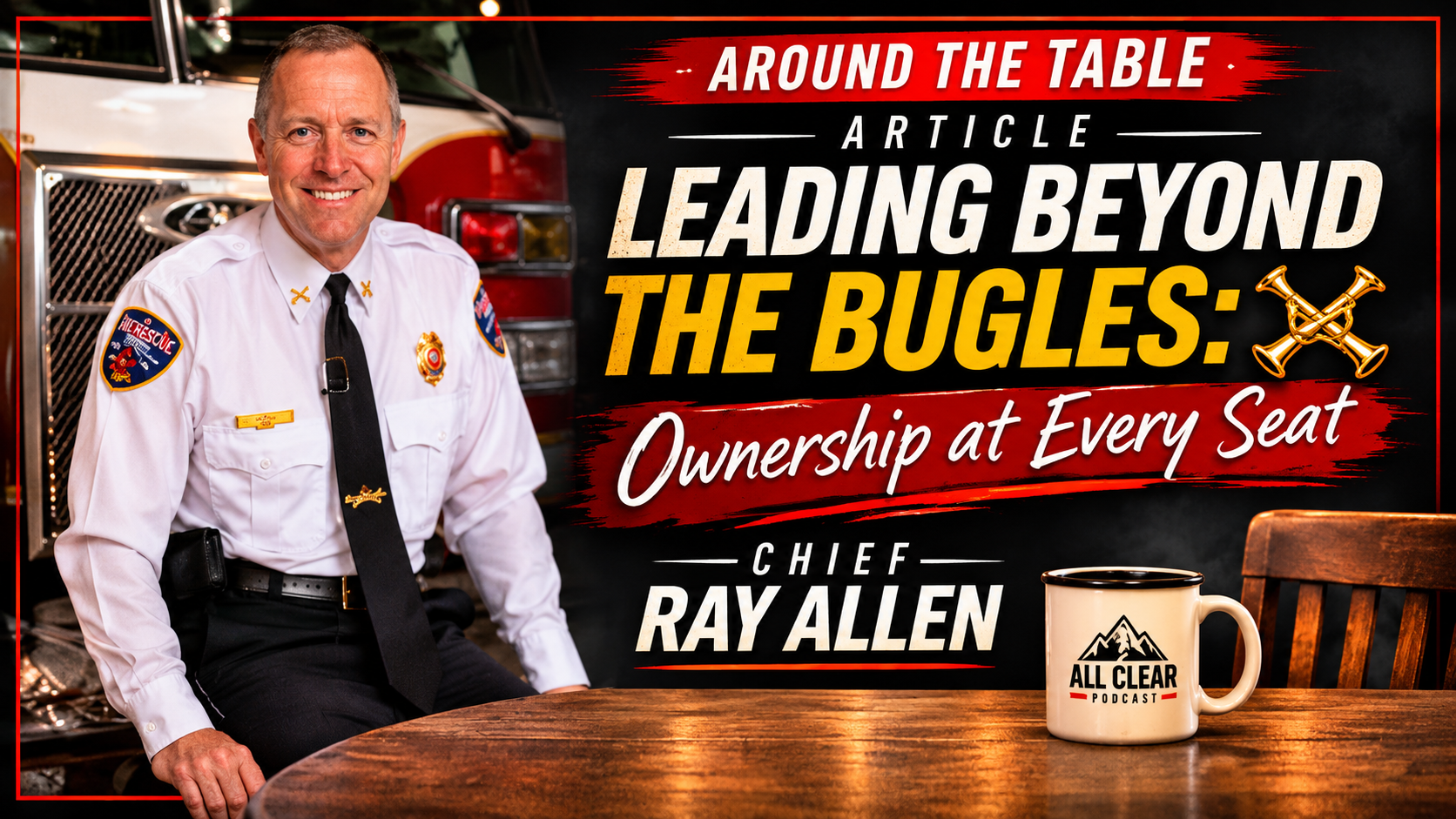 ce, it is easy to equate leadership with rank. We look at the color of a helmet, the bugles on a collar, or the title on an office door and assume that leadership belongs exclusively to the officers.
True firehouse leadership happens long before anyone takes a promotional exam. Whether you are a probationary firefighter riding backward, a senior firefighter mentoring a rookie, or a chief officer setting department policy, leadership is defined by action, accountability, and influence—not rank.
1. Master the Fundamentals First
Before you can effectively lead others, you have to lead yourself. Credibility on the fireground and at the kitchen table is earned through competence.
Show up early, check your gear thoroughly, know your district, and take pride in the daily routine. When your crew knows they can count on you to execute the basics flawlessly under pressure, they will naturally trust your voice when things get chaotic.
As Vince Lombardi once said, “Excellence is achieved by mastering the fundamentals.”
2. Set the Standard in the Station
The culture of a department isn’t built during a two-alarm structure fire; it is built during the quiet hours between calls.
Every member contributes to station morale. Taking the initiative to clean a tool without being asked, staying positive during a string of late-night EMS calls, and holding yourself to high personal standards sets a tone that pulls the entire shift up.
If you are willing to clean the toilets, your subordinates will soon follow.
3. Lead with Presence and Humility
For our company and chief officers, effective leadership requires balancing decisive command on the fireground with approachable mentorship in the firehouse.
Great officers listen more than they talk, give credit to their crews when things go right, and take responsibility when things go wrong. They establish clear expectations, provide honest feedback, and focus on developing the people beneath them so the department is stronger tomorrow than it is today.
4. Take Ownership of the Mission
Every call we run is someone else’s worst day. Things should improve upon your arrival.
True leadership means treating every response, every training drill, and every community interaction with the same level of commitment.
Ask yourself at the end of every shift:
Did I leave my crew, my rig, and my station better than I found them?
Rank gives you authority, but character gives you influence.
Regardless of where you sit on the apparatus, step up, set the example, and lead from where you are.