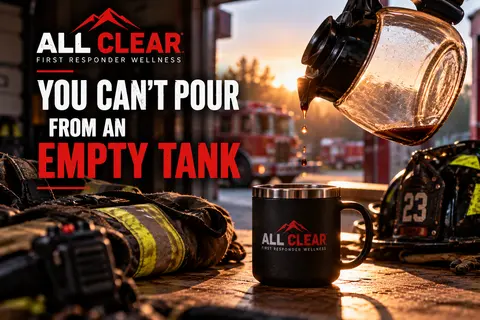
You Can’t Pour From an Empty Tank
Taking Care of the People Who Spend Their Lives Taking Care of Everyone Else
Let’s have an honest conversation around the kitchen table.
In the fire service, we’re pretty good at taking care of other people. We answer the calls, solve problems, handle emergencies, and show up when someone needs us most. We take pride in being dependable. When the tones drop, we move. When someone is having the worst day of their life, we’re expected to bring our best.
But somewhere along the way, many of us learned to put ourselves last.
We work the overtime. We skip the workout. We grab whatever food is convenient. We ignore the aches and pains. We tell ourselves we’ll schedule that doctor’s appointment next month. When stress starts building, we push through. When we’re exhausted, we reach for another cup of coffee and keep moving.
Sound familiar?
Here’s the problem: You can’t pour from an empty tank.
And eventually, something gives.
The Equipment We Often Forget to Maintain
Think about how much attention we give our equipment. We inspect our trucks, check our SCBA, maintain our tools, and make sure everything is ready when the next call comes in. We understand that equipment requires regular maintenance because waiting until something breaks can have serious consequences.
Yet how often do we give ourselves that same attention?
Our bodies, minds, and personal relationships require maintenance, too. Unfortunately, many first responders treat their own health like an old piece of equipment that can keep running indefinitely without service.
We push through injuries. We normalize poor sleep. We eat on the run. We carry stress from one shift to the next. Sometimes we convince ourselves that these things are simply part of the job.
The truth is that occupational demands are real, but neglecting ourselves doesn’t have to be part of the job description.
First responder wellness isn’t about becoming perfect. It’s about making intentional decisions that help us remain healthy enough to do the job today and enjoy life long after the uniform comes off.
That’s where the five pillars of All Clear come into play.
Five Pillars. One Healthier You.
1. Physical — Take Care of the Machine
Your body is your most important piece of equipment. It carries you through long shifts, difficult calls, physical demands, and the everyday responsibilities waiting at home.
You don’t have to become a competitive athlete or spend two hours in the gym every day. Start with movement. Walk, stretch, work on mobility, and build strength appropriate for your abilities.
Consistency matters more than intensity. Taking care of your body today gives you a better opportunity to remain active and independent tomorrow.
2. Diet — Fuel the Mission
Let’s be honest. Firehouse eating habits aren’t always a nutritionist’s dream.
Between interrupted meals, late-night calls, convenience foods, and the occasional station kitchen experiment, eating well can be challenging.
But what we eat influences our energy, recovery, and long-term health. Start making better choices where you can. Prepare meals ahead of time, add more whole foods, drink water, and pay attention to portions.
You don’t need a perfect diet. You need habits that support the life you’re trying to build.
3. Mental — Check Your Internal Gauge
We spend a lot of time preparing for the emergencies other people experience. We don’t always spend enough time dealing with what those experiences leave behind in us.
The cumulative stress of the profession can be difficult to recognize. Sometimes it shows up as irritability, exhaustion, isolation, difficulty sleeping, or feeling disconnected from the people around us.
Make room to decompress. Talk with someone you trust. Spend time doing something that has nothing to do with the job. Seek professional support when you need it.
Taking care of your mental fitness isn’t weakness. Recognizing when you need support is an important part of staying healthy.
4. Prevention — Don’t Wait for a Warning Light
We wouldn’t knowingly put equipment into service if we knew something was wrong with it. Why do we sometimes treat our own health differently?
Routine medical appointments, appropriate screenings, occupational health evaluations, and conversations with healthcare professionals are important parts of prevention.
Firefighters and other first responders face occupational exposures and health risks that deserve attention. Cancer prevention, cardiovascular health, and early identification of potential problems should be ongoing priorities.
Don’t wait until something feels wrong to start paying attention.
5. Life Balance — Remember Who You Are Outside the Firehouse
This one can be harder than it sounds.
For many of us, the job becomes a major part of our identity. We build friendships, develop a sense of purpose, and spend years investing ourselves in the profession.
But we’re more than our job titles.
We’re spouses, parents, grandparents, friends, neighbors, and individuals with interests and dreams outside the firehouse.
Protect time for those relationships. Be present when you’re home. Make memories that have nothing to do with calls, incidents, or shift schedules.
Your career is an important chapter of your life. It shouldn’t become the entire book.
Start With One Thing
Here’s the good news: you don’t have to change everything tomorrow.
Trying to overhaul your entire life overnight is a pretty good way to become overwhelmed and eventually return to old habits.
Instead, choose one thing.
Take a walk after dinner. Prepare a healthier meal before your next shift. Schedule the appointment you’ve been putting off. Put your phone down and spend uninterrupted time with your family. Have the conversation you’ve been avoiding.
Small decisions, repeated consistently, can build meaningful changes over time.
And remember, you don’t have to do it alone. Encourage your crew to make wellness part of the conversation. Check on your friends. Support the people around you. Sometimes the most important thing we can do for another first responder is remind them that they matter, too.
You’re Worth Maintaining
At All Clear, we believe first responder wellness is about more than preventing illness or improving physical fitness. It’s about protecting the people behind the gear.
It’s about having the health, energy, and opportunity to enjoy the life you’ve worked so hard to build.
We spend our careers looking out for everyone else. We train to respond, prepare to protect, and accept the responsibility of being there when others need us.
But we have responsibilities to ourselves, too.
You deserve to be healthy enough to enjoy retirement. You deserve to be present with your family. You deserve to have interests, experiences, and plans beyond your next shift.
You can’t pour from an empty tank. And you shouldn’t have to run yourself empty to prove you’re dependable.
Take care of your equipment. Take care of your crew. Take care of your family.
And somewhere in that list, make sure you’re taking care of yourself.
Stay safe. Stay healthy. And take care of each other.
— Travis McGaha
All Clear | First Responder Wellness