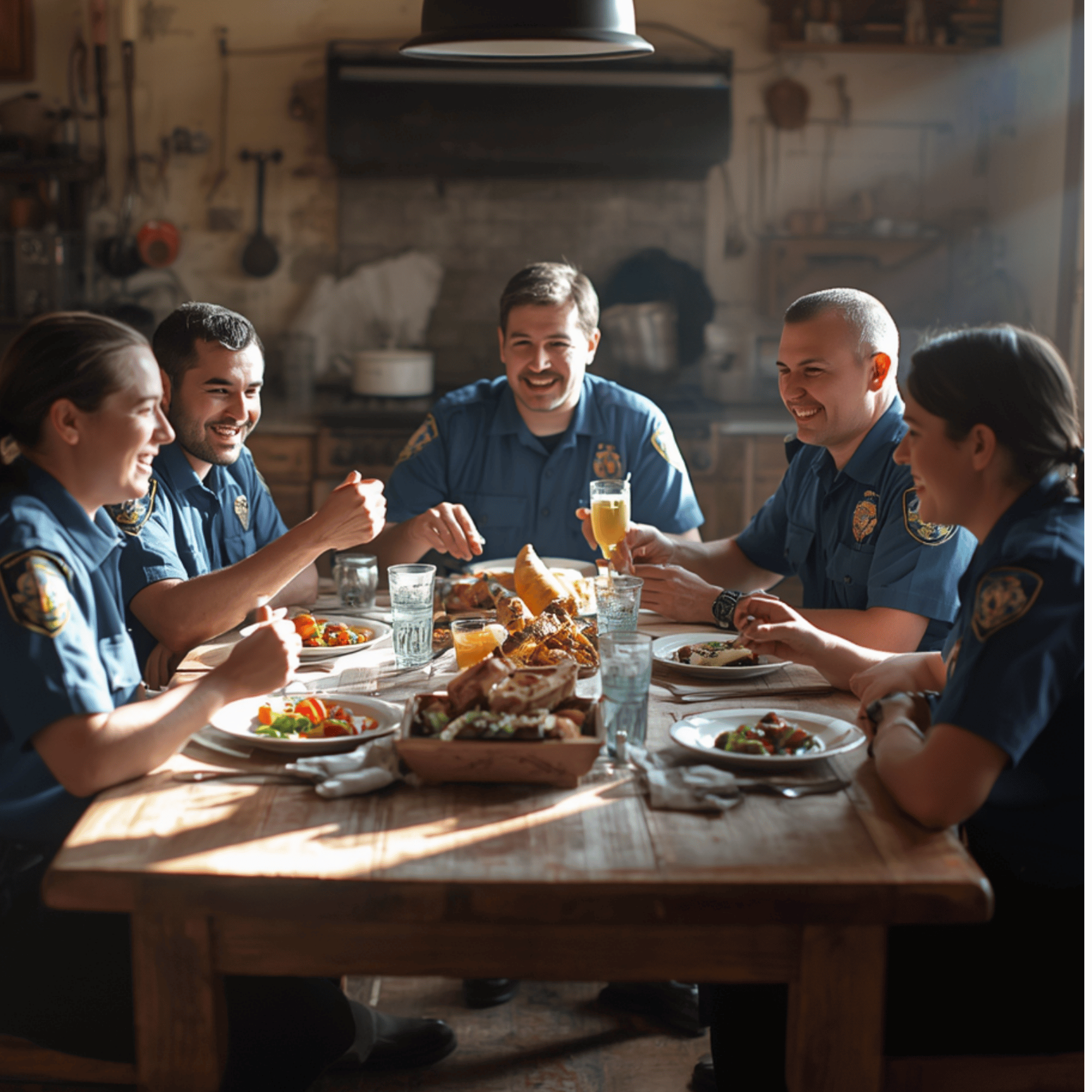
Your Mental Health Needs Training Too - With Guest Ashlea Dillard


Key Takeaways
- Treat mental fitness as an ongoing maintenance program rather than a reactive crisis recovery tool.
- Cultivate mental health tools and coping strategies before you are in the midst of a storm or personal crisis.
- Look beyond sudden behavioral changes and job performance issues to identify deeper, hidden stressors in a firefighter's life.
- Recognize when an incident exceeds internal peer support capacity and utilize outside professional or neighboring departmental resources.
- Find a culturally competent therapist who truly understands the unique realities, humor, and schedules of the fire service.
In this episode of the All Clear Firefighter Wellness Podcast, Travis talks with Ashley Dillard, a retired firefighter-paramedic who now works in mental health with first responders, military personnel, and their spouses. Ashley brings both fire-service experience and clinical experience to a conversation about changing the way firefighters think about therapy, mental health, peer support, and personal wellness.
Mental health as maintenance
Ashley challenges the old image of therapy as simply sitting on a couch talking about your deepest problems. She describes therapy as a maintenance program that can support growth, reflection, and preparation—not just crisis recovery.
Build the tools before the storm
The fire service trains before the fire. Ashley argues that mental fitness should work the same way. Waiting until life is in chaos can mean trying to learn coping tools when you need them most.
Recognizing the silent struggle
The conversation looks at signs that something may be happening beneath the surface, including changes in job performance, sleep, eating patterns, relationships, irritability, isolation, overworking, and risky behaviors. For leaders, the message is to look beyond the behavior and ask what may be driving it.
Peer support has limits
Peer support is valuable, but there are incidents that can overwhelm a department's internal resources. Ashley explains why departments need to recognize when an event is bigger than their team and bring in additional professional or outside support.
Find someone who understands the culture
Not every therapist is a good fit for a firefighter or first responder. Ashley emphasizes cultural competence, personal connection, trust, and being willing to keep looking until you find someone who understands the realities of the job.
Leadership sets the tone
A healthier fire-service culture starts at the top. Ashley argues that departments should normalize mental health support, strengthen peer support, and make it clear that asking for help is not a reason for punishment or shame.
Key Takeaways
Mental fitness should be treated as part of a firefighter's regular wellness routine.
Don't wait until you're in crisis to learn the tools that can help you through difficult seasons.
Behavior and job performance problems may be signs of deeper stressors rather than simply a lack of effort.
Peer support should know when an incident exceeds its internal capacity.
Finding a culturally competent therapist may require research and trying more than one provider.
Healthy leaders help create healthier firefighters and healthier departments.
Thanks for listening to All Clear!
You can contact us with questions, suggestions or just to say hi at our website
allclearpodcast.com
Also pick up a bag of our signature All Clear Coffee. A unique cup that will quickly become your new morning hero in a cup!
Please like and subscribe on you platform of choice! It dosent cost you anything and it helps us more than you will ever know!
Frequently Asked Questions
What is the biggest myth about therapy for firefighters?
The biggest myth is that therapy simply means sitting on a couch talking about your deepest feelings in a traditional, clinical setting. Modern therapy includes a variety of advanced, non-traditional modalities tailored to first responder brains.
When should a firefighter seek professional mental health support?
Firefighters should engage professional support before hitting a crisis point, using it as regular maintenance to clear triggers and build tools ahead of time rather than waiting until coping mechanisms fail.
How can fire service leaders better support struggling crew members?
Leaders should look beyond immediate discipline for performance issues and ask deeper questions about what stressors may be happening at home or on the job, creating a safe culture where asking for help is normalized.
How do you find a culturally competent therapist?
Finding the right therapist requires doing thorough research, looking for providers who specialize in first responders, and using a trial-and-error approach until you find someone who understands the culture and builds genuine trust.
Ashlea Dillard Interview
[00:00:00] All clear where the truth cuts through
Travis: We've got Ashley Dillard with me today. Now, Ashley is a, uh, fellow podcaster. Um, she is a clinician, has all kinds of stuff, plus she's got a fire background. So Ashley, why don't you tell our listeners who you are, what you do, and how you got to where you're at right now?
Ashlea: Sure, absolutely. Well, thank you for having me on your show. It's fun to continue our conversation, so thank you for that to start off, and thank you for everyone who's listening. But I am Ashley Dillard. I am a retired firefighter paramedic, so I spent just short of 10 years online doing the work and have transitioned out of that into a new season of being a different kind of helper.
So now I'm on the other side doing mental health work, um, mostly with first responders, [00:01:00] military, and their spouses, and I get to show up for my brothers and sisters who are still online in a different kind of capacity. So my mission is to end the suffering. I think there's a lot of pain and suffering happening out there.
There's a lot of pain and suffering happening in the world of first responders, and I am on a mission to do my part to help change that and to make things different so people can have incredibly healthy lives, incredibly healthy careers, relationships, all the things
Travis: Absolutely. And you know, when you find someone that can handle both the clinical side and have a background in the industry, that, that's a very rare combination. There are a few clinicians around the country that can do that, and, um, I think that makes you unique in being able to kinda carry on, uh, the conversation a little bit further.
Um, and if you've not heard the, her podcast, it's Sit- Sitting Around the [00:02:00] Fire, and, uh, we've done an episode there where we talked about mental fitness and, uh, anyway, so this is a continuation. Go check that out. She'll tell you about that at the end. But Ashley, what's the biggest myth people believe about mental health or mental fitness when it comes to the fire service?
Ashlea: Yeah, this is such a good question, and it's one of my favorite questions 'cause I think I'm so passionate and fired up about it, is people have this belief, this idea around what therapy is, for one, or maybe they've seen some depiction of therapy in the movies or a TV show or things like that, and they think it's sitting across the table from a guy wearing a suit with a notepad and like...
Or laying on the couch doing this whole therapy work
Travis: He's talking about your mother
Ashlea: yeah, exactly, which is funny. But we have, we all have this [00:03:00] perception or this idea around what therapy is, and I think there's a huge movement towards, but still a lot of work around changing that. Is like, therapy is so much different than what you think it is, and it's not...
There's so many cool modalities out there now as well, where it's not always what it used to be. It's not just sitting down and talking about things or somebody asking you to share your deepest, darkest feelings all the time. But it really is, as you reflect on it a lot, it's part of a wellness routine, and I speak to it a lot as therapy as a maintenance program, not something where you're constantly in this crash recovery type state after things have gotten really bad, now I'm going to therapy.
It's recognizing and realizing the world is stressful. Life has stresses within it, and we all need that place where we can [00:04:00] go decompress or to talk about things, to have an authentic connection with somebody, to be able to just kind of work things out in a place. Even if you're just working on self-growth.
It doesn't always have to be addressing specific traumas or healing from things like that. Therapy can be used for growth as well. So I would really love for us to move away from this old model of what we think therapy is and recognize that it's so much different and it's so progressive now in what the options are, that you just need to find the tool that fits for you, that resonates with you, um, and that's needs to become a maintenance program.
Just like you do maintenance on your car or on things around the house, it needs to be seen as part of this routine. Physical, mental, spiritual, emotional, all this needs to become a [00:05:00] wellness program, for lack of a better way to say it.
Travis: I got you. Now, one of the things you mentioned were different modalities, and, you know, you mentioned the old school talk it out. But what are some of the other modalities that, that you're seeing as a professional that are being put into the toolkits of, uh, I guess of firefighters now to be able to deal with different issues that they may encounter?
Ashlea: Mm-hmm. Yeah, one, I coined myself as a non-traditional therapist because I'm never, I'm never gonna wear a pantsuit into a session, for sure. Like, the only time I wore a pantsuit was when I had to interview for the fire job, and that will be the one and only time I ever wear a pantsuit again. But the work specifically that I do that's out of the box is I work a lot with hypnosis, and I do work with the nervous system and the body.
I do work with some of the ketamine-assisted psychotherapy, so some of the different modalities in that [00:06:00] way, uh, that I work with. But there are other things out there like equine therapy. There's art therapy. There's therapy involving movement, being outdoors. There's gr- different kinda groups you can tap into.
There's things like neurofeedback and EMDR, brain mapping, eye movement therapy is... There's so many different things out there to try. I think it's just kind of an excuse you're gonna use for yourself if you say, "Oh, I'm not gonna go to therapy because it's just gonna be talking to somebody." Is like, you need to get over that excuse, start to explore some of the other modalities, 'cause I think as first responders, we need those different modalities.
Is that we don't work in traditional environments. We don't have traditional schedules. Our brains are wired differently now based on the work that we've done, is you're going to need some of these non-traditional [00:07:00] modalities to get you where you want to be and to get to the, the ultimate state of life that you wanna be in and the goals you wanna achieve, is you're gonna have to start to explore outside the box
Travis: So that, that does make a lot of sense. And, you know, talking about the different modalities and the different things that you do as a professional, when you start talking about the firefighter individually, when do coping skills stop being enough and real support become necessary? When it-- when is it we can't do it ourself and we need to engage somebody that's, uh, smarter than us?
Ashlea: Mm-hmm. Um, I would say before you even have the question in your mind pop up is that you need to be tapping into some higher resources. So the goal with therapy, I see it, is it's not Meant to be something that puts a bandaid on, but it gives you the opportunity to do some of the deeper reflection and the [00:08:00] deeper work.
And then you as the individual have to have the responsibility and the accountability to go out there and do the work yourself. And so you need, just like we all have to go learn new skills, that's why we go to different trainings, whether it's forced entry, or investigations, or fire tactics. We go to trainings because we learn new ways of doing things, and that's also what therapy is, is going to, to learn these new tools and these new tactics on how to do stuff.
So I always recommend to people, like, let's not wait until you're in the midst of the storm. Like, learn some of these tools and tactics now. Like, if you can clear your buttons and your triggers before life gets to you in that way, you're so much better off. So go do the work before you're in the midst of chaos, or grief, or whatever it is that you're [00:09:00] sitting in, is go do the work ahead of time.
So when you ask, like, "When do we recognize that the coping mechanisms are no longer working?" is because they're really never working for you. It's just a bandaid that you're putting on a bigger problem. And paying attention to coping can look like so many different things for so many different people.
It can look like picking up more overtime, overworking, signing up for shifts all the time. Uh, it can look like sleep issues showing up. It can look like eating patterns changing, your relationships changing, uh, being more irritable, or finding yourself distancing from other people. Or on the opposite, like, you've gotta be around people all the time.
It can look like engaging in dangerous kind of behaviors, whether it's with substances, or excessive gambling, or spending, or [00:10:00] any of these kind of things can all be... These are symptoms of a bigger problem that are underneath the surface. So I would, I would say just go clean your house. Like, go do the work before you even get to that point, is there's nothing wrong with getting equipped with the tools and the tactics ahead of time so you're not playing catch-up.
It's kind of almost like thinking about we're never gonna plan for any kind of fire. We're just gonna go in and wing it when we get there and see what happens, is like, that's actually, like, really insane. Nobody would ever say that on a fire department, or you'd be a really terrible fire department.
That's why we train, that's why we practice, that's why we throw out different scenarios, and that's exactly what therapy will help you do, is to equip you for those scenarios when they come up
Travis: That, that sen-- that, that is a good description, I think, of, uh, of how therapy should be viewed. Now, a lot of times if somebody's already started [00:11:00] putting the work in or maybe they haven't hit that wall yet to where they really do need to dig in and get some more help, what, uh, a-as a, say, a chief officer or as a company officer, what are some of the signs that we can look for in our guys and girls that maybe indicate that there's something going on?
Maybe it's a silent struggle, something like that. What are some things that we can look for and how can we address them?
Ashlea: Yeah. I'm so glad that you brought this question up to the surface 'cause I think this is one of the places where we're lacking within the culture for our departments, is our leadership seeing this. And one of the biggest signs, things that I see when people come to do work with me is a lot of times the leadership has no idea what's going on, but they start to kind of recognize that job performance or behaviors start to struggle, and therefore these folks are [00:12:00] actually, like, getting disciplined.
So it's like, "Oh, he's calling out sick. He must be wasting his sick time," or like, it's, um, like, "They're not getting along with other people," or, "He's not really putting in the effort." Whatever it is, they start to see that show up more in that sense is, like, the job performance side becomes impacted. The officers are then, like, taking the administrative, like, disciplinary action to it, but nobody's asking the back-end questions of like, "Hey, what is actually going on in this guy's life or this gal's life?
What is happening at home?" Like, what are the stressors that's either going on at home or in the job, is we're automatically drifting towards discipline. And I think that's where we're missing the mark huge with people, is that if you asked 10 out of 10 of those people, they would tell you, "Oh, like, uh, I'm in the midst of going through a divorce," or, "I have a kid who's struggling in school [00:13:00] being bullied," or, "I...
You know, my spouse is a first responder, and we have two days off a week together." Whatever it is they're going through, I mean, the other big thing is health issues, like people having these undercover health issues going on, and our leadership is not asking those questions. We're just assuming that people wanna do a crappy job or they don't really wanna do the job.
And I think that is where we're missing this so badly, is checking in and saying, "What's going on in life for you?" Like h- And the leadership in the department showing up to support those individuals, it, it... That would just change everything. It would be so much nicer if that was the way it went
Travis: So underst-- we, we see the what, you know, the, the action we have to take, but we need to ask why do we see the problem? I think that's, I think that's what you were driving at. And, you know, sometimes I think we have to kinda boil it down [00:14:00] for, uh, for those of us that work at the fire department because, uh, sometimes we don't understand, um, every angle.
Um, we tend to be very reactive and not proactive. You know, having come from the fire service, I think you're pretty well aware of that, and we just wanna kinda get ahead of it. But at the same time, why are we at this point? So that, that is a good, uh, good way to describe it
Ashlea: Yeah, nobody-- none of us wanna show up to the job and do a bad job at it. Nobody wants to, like, nobody's trying to sabotage, you know? Or wants to... You know, we're really proud of doing the job, and we've all worked really hard to get where they are-- where we are within it. And so I think really, like, checking your ego, checking yourself, and, like, asking those underneath questions about, "Hey, like, this is going on.
What's happening? Like, can we show up for you?" And not... The other big problem I see a lot with people who come through my practice is they're worried about the [00:15:00] discipline side of things. " If I ask for help, then what does that mean for me? Does it mean, like, I'm gonna get taken offline, or does it mean I'm at threat of losing my job?
Are people gonna see me differently?" All of these things that come with even just asking for help or putting it out there is really stepping up as departments and supporting people and equipping them with resources that shares and promotes this message of, like, "We see you, we hear you, but we're here to support you.
We're not here to discipline you," or, "We're not here to treat you differently, as we actually value your mental health, and we want you to be healthy firefighters, healthy first responders doing the job."
Travis: Excellent. So if somebody in our audience says, "Hey, I want to be a healthy first responder, I want to be a good firefighter, I want to get ahead of this," um, what does effective mental fitness look like day to day? What are some of the things we can do? Uh, what should we be watching [00:16:00] for in ourselves that might, uh, give some indication as to, uh, the, the quality of life we have?
Ashlea: We need to look at mental health just like we look at our other wellness routines. So every day we get up, we, you know, should be drinking good ample amounts of, of water. We should, you know, be moving our body, doing some kind of fitness, uh, fueling our body with good food, is realizing like the mental health side requires the same kind of intention behind it.
So whatever that looks like f-for an individual, whether they have some kind of prayer, meditation practice, whether they do, you know, spend time outside in nature, whether they're intentionally connecting with others, they're diving into therapy, they're connecting in with other resources and groups. Um, but it, it really has to become part of your enveloped [00:17:00] routine.
Just like you-- I mean, we know all, most, I'll say not all, most firefighters love going to the gym, but... or working out, is it, it needs to be viewed in the same way, is if not more important. Because if your mental status is not well, if you're not talking to yourself well in a positive way, literally every cell in your body is impacted.
So you're actually not gonna get that good of a workout. You're not gonna like develop more muscle mass or endurance. Like it... your body is working against you based on how you're talking to yourself. And so it has to be this all-encompassed global take at your mental fitness, just like you put investment into every other area of your life, taking supplements, whatever it is that you do, you know, as part of your routines.
It, it really does have to become a practice in the same way so that you can [00:18:00] show up at the job and show up at home outside of work, like as your best self really. It, it has to be a daily effort, a daily routine
Travis: So when we talk about, um, doing those types of things, you know, a word that gets thrown around a lot, and I think a lot of people may be confused by, is self-care. What, what, what are self-care routines? Um, I know some people, they like to journal. Some people, like you mentioned, the meditation. What are some other self-care, briefly I guess, things that we could do to take care of, take care of our own, uh, mental fitness?
Ashlea: Yeah. First off, I've actually moved away from using the term self-care because I think a lot of people start to find this turns into another thing I have to do, and it feels more like a, a burden or a task rather than something that fills your cup. So I shifted the language around self-care as to like, uh, what [00:19:00] is my, like, practice essentially.
Like, what are the things I do for myself? Um, 'cause it feels differently to me in that way as, like, not like another thing on the to-do list, but this is just part of how I show up for myself, how I take care of myself. So I alwa- I always usually recommend people have some kind of, whether it's meditation, and that's a whole 'nother thing to dive into and explain what people think meditation is.
Uh, but if it's prayer, if you're spiritual or religious in that way, that also is great. But it can very als- simply just be literally going outside. Going outside, sitting in the sun, like connecting back with nature. Those little things I always recommend people start small, like small things, whether you're gonna do it for five minutes morning and evening or five minutes throughout the day.
Um, but people really have to find the ritual of renewal that works for them and that f- fills them up. So it's kinda different depending on [00:20:00] person to person and what people are willing and open to exploring, if that kinda answers your question
hopefully.
Travis: does. And, and I do like the fact that you're moving away from the term, uh, self-care because I think, uh, that can get very confusing and some-- and, you know, in the fire service we have to put a label on everything. And if you've got a Dymo labeler, boy, we're in trouble. Um, so y- you know, it's one of those things where there's not a checklist for it, there's not a SOG for it, you've just gotta figure out what works for you.
So very good. So now if you could change one thing about how the fire service approaches mental health tomorrow, what would it be?
Ashlea: This is a good question. I, uh, in my heart of hearts, it's saying, like, we need a h- a revamp in the system. It's kinda like looking at an old SOP [00:21:00] or SOG and saying, like, "Wow, this was something we did back in 1969." Like, does this apply for the kind of building construction we have now, or the, you know, type of living arrangements that people have or where we're at?
'Cause I feel like it's outdated. It needs a whole kind of revamp to the system. So I think it starts with, like, helping, you know, like the work that you're doing and others are doing to encourage and inspire and re-educate around what mental health is and how it's important, how it's really truly impacting us.
But then also just very much normalize it and to make it as part of this is just how you take care of yourself as a firefighter, as a r- first responder. It's normal to go to therapy. It's actually praised and advocated for that you go take care of yourself, that you... if you need time off, like, you're not pressured or [00:22:00] made to feel guilty or things like that.
You're very well-supported within the department. So I think helping set that up as well as continuing to bolster up peer support, I think is huge, 'cause peer support's doing really awesome things out there, continuing to advocate and give resources. But opening up the minds of people and accepting that, like, what we're doing now isn't necessarily working or isn't effective and being okay that, like, we're not a bunch of robots programmed.
Like we do-- We're supposed to have emotions. We're supposed to be human. We're supposed to feel things. And helping equip people to have a really healthy career and still be connected in that way. So that's my... I think it takes a whole revamp. I don't know. I don't have it all written out in a new SOP yet.
I would do it. But, um, I think it just starts from the top down. The leaders need to be [00:23:00] healthy. Your officers need to be healthy. That trickles down to everybody online. Like, it has to be a priority. It has to be an investment. And so that looks different for everybody, but that's really the bottom line.
Travis: I gotcha. I gotcha. So let's go back and talk about peer support for a minute. I know that's another one of those words that gets thrown around a whole lot at conferences and peer support teams, and there are value to them as you were mentioning. But let's say you have a, a, a really gnarly ac- you know, incident and a lot of people are involved.
It's not just one company or two companies, but say it impacts a community. Um, at what point do, do you need to shift from peer support to say, um, post-incident, you know, post-incident, uh, I'm not gonna say analysis, but, you know, coming together and debriefing and things like that. Um, at, at [00:24:00] what point do you need to go, do you need to shift between those two things?
I don't know if that question makes sense or not.
Ashlea: Yeah, it does, and I think I can bring a couple of examples that I saw when I was online particularly is I think the, the more complex the call, the event, the scene requires a l- more dynamic help within that. As you-- if you have, you know, five engine crews and three ambulances, and all this kind of... Which is what usually happens in the big ones, is like re-recognizing your scope and realizing, "Okay, this is, this is bigger than-- this is involving too many people.
Like, we need to seek out extra help for this and get support from some other resources, as well as get people individualized support as well." My department, um, we had somebody who took their own life, who committed suicide, and that was the first time that [00:25:00] that had ever happened at our department. Um, and we didn't really have a protocol or know how to handle that.
And so it was kind of, you know, figure it out moment by moment and, uh... 'Cause what do you do when, like, your whole department's affected, and your peer support is kind of enacted-- n- inactive, negated at that point when they're just as affected as everyone else?
Travis: Peer support needs peer support
Ashlea: Exactly. And just recognizing that's why the peer support has the connections that it does is because, okay, if this is bigger than what we can handle internally, it's starting to get too complex or too many people, or we just feel the need to get support is that's why you partner with other neighboring departments, or you start to tap into some of the professional side of things to have people to come in to help that.
A-and the really good thing about it, that releases the burden upon the department, right? It's like, [00:26:00] now you're not trying to figure out how to handle this in the midst of doing the logistical side of things. It's now you-- that is already taken care of by someone else who's gonna make sure all aspects of it are addressed, and they're all hit.
But it's just like recognizing when you need to call a second or third alarm, right? It's we're out of resources, we're tapped out, or this is way beyond what we can handle, and we need to start, like, asking and navigating in for help.
Travis: I gotcha. So now I, I don't know if it's the same, I think you're, you know, in Colorado where you are, I, I think it sounds like you guys got it pretty well sorted out. I know here in North Carolina, we, we've got it pretty well sorted. We've got several peer support teams, but it's almost like it shifts to the Wild West sometimes when it comes to be, you know, it's time to start calling.
Who do I call? Which one of these teams do I call? Um, uh, how do you vet the resources that are truly beneficial, whether it [00:27:00] be an individual therapist or if it be, you know, a peer support team or even, uh, even dogs, you know, bringing in the support dogs and things like that. How do, how do you vet who's good, who's not great, who's maybe, uh, can work to a certain level?
How do you do that?
Ashlea: I think the biggest thing it starts with really doing your research on who's gonna be culturally competent. So not every therapist is going to work well with first responders. I went to a lot of really bad therapists that either told me, "Well, you need to find a different job," or like, "Oh, what's the worst call that you've ever been on?"
It's like, "Why are you asking me that question as my therapist?" Like, no. Of just realizing we are a different breed of people, if we're totally honest, and we have a whole different way of looking at humor. We have a whole different way of looking at the world. And really doing your vested time to find [00:28:00] somebody who is culturally competent and can understand it when you are sitting across from me and asking me like...
Or saying, "I really wanted to drive over this person with the fire truck today." Or like whatever it is, it's like, "I hear you. I've been there, too." Like, we've all been in spots where we can understand what the dynamic is like to work 48-hour shifts, to have to work, to get mandatoried on holidays, to be away from your family, to have no sleep in two days.
Like all the things. Finding a person that can resonate and to really understand what that dynamic is will serve you so far. So that just requires research and some exploration, and trying it out, right? It's like I always go to the try, try method. Keep trying till you find somebody that you do click with, that you do, like, can resonate with and build that relationship with.
On the bigger scale when it comes to [00:29:00] peer support and things like that is there's some really incredible training agencies out there now that are totally first responder. Um, there is the Public Safety Peer Support Association out of California. Does a ton of training and, like, getting peer support teams geared up, as well as here.
I know here in Colorado, we have the First Responder Trauma Counselors. They also do the same thing, so they specifically go take individuals through, uh, both of agencies do this, both they take individuals through 40 hours of training for peer support to help put together the teams. And those kind of agencies which are really making headway now are helping set people up with, "Here's a good resource for this.
Here's somebody that can help do a, you know, a big debrief for you or get you connected with a clinician who is culturally competent." Um, so I think leaning into those if you're a department, but the individual just [00:30:00] requires research and listening to shows like this and hearing other people and finding, keep asking, keep reaching out till you find somebody that works for you
Travis: Yeah. A-and, and the personal connection is a huge part of it. Um, if you don't trust the person you're talking to, you're not gonna, you're not gonna make, uh, not gonna make progress. I have, uh, one of the guys I know who does peer support here in North Carolina, he's always said, "If you're still talking to somebody two years later and you've not moved anywhere, might be time to be thinking about either a n- a new modality or a new, new therapist to work with."
So, lot, lot to be said for that. And I know on your podcast, one of the things we talked about was attention span. And you b- you bring up a, a good point. Ma- it makes me sound like an old man when I talk about kids these days and their short attention spans. But the value of a podcast like the one you do, Sit, Sitting, Sit Around the Fire, the one we do here, All Clear, [00:31:00] these are not the superficial conversations that you can catch in a TikTok reel.
This is something that you've gotta sit down and listen for 30, 45 minutes, but you take away so much more. And that's why I encourage people to look to podcasts like yours and your unique point of view as being, you know, somebody that's been on the line, somebody that's also, you know, a professional, uh, dealing with mental health.
So, if people wanna learn about what you're doing, um, your services, your, uh, your podcast, and everything you got going on, how do they find out about you, Ashley?
Ashlea: Sure. Yeah. Well, before I give you that, one thing I will add to that, what you just said about giving, investing your time into it is, like, deciding that you're worth it, right? Is you're, you're investing within yourself, so listening to that podcast for 20, 30, 40 minutes and an hour is realizing this is something you're doing incredible for you, and you have to decide that you're worth it to do it.
So it's, [00:32:00] like, pretty clear. It's like we would do anything for other people. That's why we're in this industry. But you gotta be worth making the investment for, so don't hold back on that. But if you are curious about me or the work that I do, you can get connected with me through my website. It's sitaroundthefire.org.
Everything is kinda getting ready to shift here in the next couple weeks with the new year, but you can definitely get in touch through that way and also connected in through the podcast, Sit Around the Fire podcast. We're also, um, on social media, on Instagram, Sit Around the Fire podcast, things like that, so you can definitely get connected in that way.
And if I can help point you in the right direction of somebody too, like I- we-- the network is growing, and it's big, which is awesome, so we can help find you support even if we don't end up doing work together. I can do my best to help point you in a good direction. But [00:33:00] just don't wait. Like, time is of the essence.
Like the, there's an urgency to this work, and we have to start, like, showing up for ourselves. We have to start moving out of this pain and suffering and into, like, living a very healed, transformed, incredibly, like, good life.
Travis: So you heard it from the therapist here. She said podcasting is a good form of self-care, so please like and subscribe to her podcast, also to ours here at All Clear. Um, Ashley, thank you so much for being with us. We'll have all your contact information on our website, allclearpodcast.com. And we always say here on our podcast, light your fire within
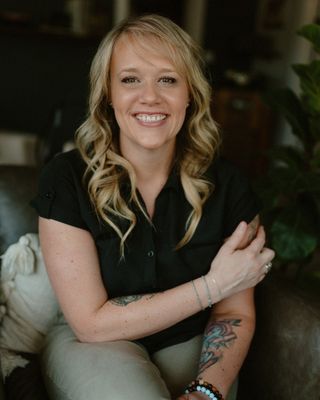
Therapist / Podcaster / Firefighter
Before stepping into my work as a Licensed Professional Counselor and Certified Clinical & Transpersonal Hypnotherapist, I spent nearly a decade serving my community as a firefighter and paramedic. Those years on the front lines taught me profound lessons about courage, resilience, and the invisible weight so many people carry—especially those whose lives are shaped by service. That experience didn’t just change me; it became the foundation of my calling.
As a former firefighter–paramedic turned therapist, I remain deeply connected to the communities I once stood beside. I understand the identity shifts, cumulative stress, and unspoken grief that can accompany a life of service—because I lived it. Today, I bring that lived understanding into my work with first responders, military members, veterans, and their spouses, offering culturally competent, trauma-informed care that honors both strength and vulnerability as a part of the work that I do.
While I hold deep respect and understanding for the first responder and military communities, I genuinely enjoy working with people of all backgrounds, identities, and life journeys. I believe every individual carries a unique story, and it is an honor to walk alongside clients from diverse paths as they explore healing, growth, and self-discovery.
I hold an undergraduate degree and a master’s degree in mental health and clinical counseling, and I’ve completed advanced training in psychedelic-assisted therapy through Numinus. In addition, I have over 500 hours of interpersonal and transpersonal clinica… Read More