Caffeine: Tool or Crutch?

Send us Fan Mail How much caffeine have you had today? Maybe it started with coffee on the way to the station. Then somebody made another pot at the firehouse. After lunch came an energy drink. Maybe there was some pre-workout before hitting the gym, followed later by a caffeinated sparkling water. None of those choices automatically makes caffeine a problem. The bigger question is: When does caffeine go from something we enjoy to something we need? In this solo episode of the All Clear Firef...


Key Takeaways
- Firefighter caffeine use is common for boosting alertness during long shifts, but caffeine cannot replace proper sleep or recovery.
- A simple three-day caffeine audit helps firefighters track total daily consumption, timing, and physical responses without immediate lifestyle overhauls.
- Stacking multiple caffeine sources throughout the day—such as coffee, energy drinks, and caffeinated sparkling water—can quietly accumulate and disrupt sleep patterns.
- The All Clear Kitchen Table Blend highlights the social connection of the firehouse kitchen table rather than just pushing stimulants to survive a shift.
- Experimenting with an earlier caffeine cutoff time can significantly improve sleep quality, daily energy, and overall physical recovery for first responders.
How much caffeine have you had today?
Maybe it started with coffee on the way to the station. Then somebody made another pot at the firehouse. After lunch came an energy drink. Maybe there was some pre-workout before hitting the gym, followed later by a caffeinated sparkling water.
None of those choices automatically makes caffeine a problem.
The bigger question is: When does caffeine go from something we enjoy to something we need?
In this solo episode of the All Clear Firefighter Wellness Podcast, Travis takes a practical look at caffeine in the fire service—not to tell firefighters to give up their coffee or energy drinks, but to encourage them to understand how they’re using them.
Caffeine can increase alertness, help with focus, temporarily reduce feelings of fatigue, and under the right circumstances support performance. Those benefits are understandably attractive in a profession built around long shifts, interrupted sleep, unpredictable calls, and demanding physical work.
But caffeine cannot replace sleep or recovery.
That distinction leads to the Kitchen Table Question for this episode:
Am I enjoying this caffeine, or am I compensating for something?
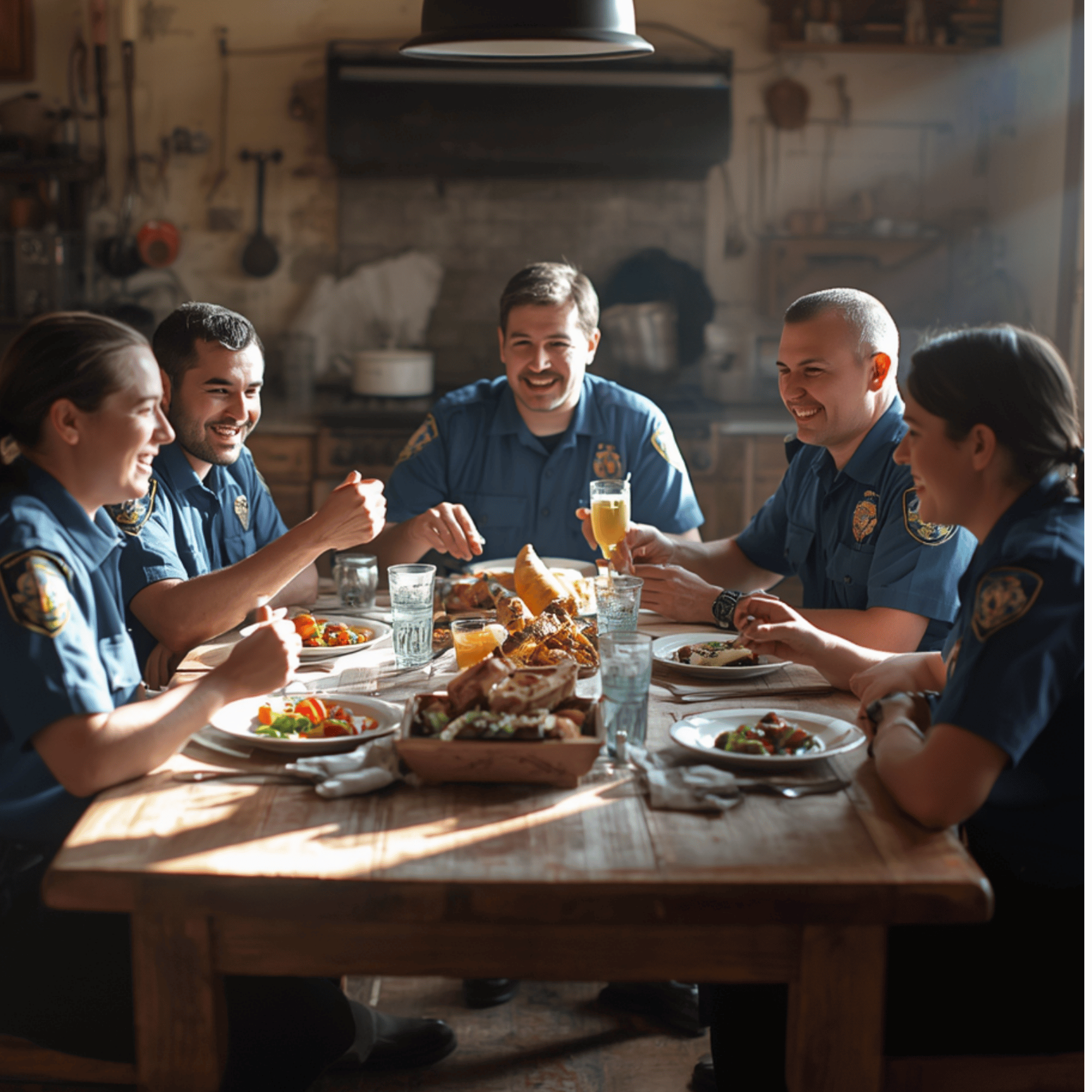
Travis also talks about coffee and its unique place in firehouse culture. A pot of coffee often brings people to the kitchen table, and conversations that begin with absolutely nothing important can sometimes turn into the conversations that matter most.
That connection is also the idea behind the All Clear Kitchen Table Blend—not pounding caffeine to survive another shift, but pouring a good cup of coffee, sitting down, talking, listening, and connecting with the people around the table.
The conversation then moves beyond coffee to energy drinks, pre-workout products, caffeinated sparkling water, and one habit that's easy to overlook: stacking caffeine throughout the day.
Instead of judging one drink by itself, Travis challenges firefighters to look at the entire day. What did you consume? How much? When? And how did your body respond?
The episode connects those questions directly to All Clear's Five Pillars of Firefighter Wellness: Physical Fitness, Mental Fitness, Diet, Prevention, and Balanced Life.
The goal isn't to create a perfect caffeine plan. It's awareness.
Because before you can decide whether a habit needs to change, you first have to understand the habit.
In this episode, you'll hear about:
- Why caffeine is so common in firehouse culture
- The difference between using caffeine as a tool and depending on it
- Why caffeine doesn't replace sleep or recovery
- Coffee and the social connection of the kitchen table
- The story behind the All Clear Kitchen Table Blend
- Why what you add to coffee matters
- Energy drinks and why reading the label matters
- Caffeinated sparkling water and other easy-to-miss caffeine sources
- How caffeine can accumulate when you stack multiple sources throughout the day
- The relationship between caffeine timing and sleep
- How caffeine connects with all Five Pillars of Firefighter Wellness
- Why individual response matters
- How to conduct a simple three-day caffeine audit
- How experimenting with your caffeine cutoff can teach you about your own body
Kitchen Table Actions
1. Conduct a Three-Day Caffeine Audit — Diet / Prevention
For three days, don't intentionally change anything. Just pay attention.
- What you consumed
- How much you had
- What time you had it
- How you felt afterward
- How you slept that night
Don't diagnose yourself and don't try to create the perfect plan. Gather information first.
2. Experiment With Your Cutoff — Physical Fitness / Balanced Life
After you've tracked your normal habits, try moving your final caffeine of the day earlier.
Pay attention to how easily you fall asleep, how well you sleep, how you feel the next morning, and how your recovery feels.
The question isn't whether somebody else's caffeine routine works. Does yours work for you?
The All Clear Challenge
This week, don't give up caffeine. Understand your caffeine.
Read the label. Know how much you're consuming. Look at your entire day rather than one drink at a time. Watch the clock. Most importantly, listen to your body.
Is caffeine a tool you're controlling—or has it become a habit that's controlling you?
Learn more about the All Clear Firefighter Wellness Podcast and the All Clear Kitchen Table Blend at allclearpodcast.com.
Take care of yourself. Take care of your crew. Keep the conversation going around the kitchen table.
Light your fire within.
Thanks for listening to All Clear!
You can contact us with questions, suggestions or just to say hi at our website
allclearpodcast.com
Also pick up a bag of our signature All Clear Coffee. A unique cup that will quickly become your new morning hero in a cup!
Please like and subscribe on you platform of choice! It dosent cost you anything and it helps us more than you will ever know!
Frequently Asked Questions
How does firefighter caffeine use impact sleep and recovery?
While caffeine temporarily increases alertness and masks fatigue, consuming it too late in the shift interferes with deep sleep, creating a cycle of exhaustion and heavy reliance on stimulants.
What is a firefighter caffeine audit?
A three-day tracking exercise where firefighters record what they drink, how much caffeine they consume, the timing of each beverage, and how it impacts their mood and sleep.
Why is stacking caffeine a problem for first responders?
Stacking hides the true amount of stimulants consumed daily by combining coffee, pre-workouts, energy drinks, and caffeinated sparkling water, making it easy to exceed safe thresholds.
Is caffeine bad for firefighters?
Caffeine is not inherently bad and can be a helpful tool when used intentionally, but the core issue is whether you are enjoying it or using it to compensate for chronic exhaustion.
How much caffeine have you had today?
Seriously. Think about it for a second.
Maybe you hit the drive-through on the way to the station and grabbed a coffee.
Maybe you poured a cup when you got to work and sat down at the kitchen table.
Then somebody made another pot.
Maybe sometime after lunch you grabbed an energy drink.
Or maybe you had a terrible night, ran calls, didn’t sleep worth a darn, and caffeine became the thing that was going to get you through the day.
Here’s the question I want us to think about today:
When did caffeine go from something we enjoy to something we need?
Now, before somebody starts sending me messages, this is not an anti-caffeine episode.
I’m drinking coffee too.
The point isn’t that caffeine is bad. The point is that we need to understand how we’re using it.
That’s a theme you’re going to hear over and over again on All Clear.
Be intentional about what you’re putting into your body and understand what it’s doing to you.
Because there’s a big difference between using caffeine as a tool and depending on caffeine to compensate for something else.
⸻
WHAT IS CAFFEINE ACTUALLY DOING?
Caffeine is a stimulant.
That’s why we use it.
It can increase alertness. It can help us feel more focused. It can temporarily reduce that feeling of fatigue. And in the right circumstances, caffeine can support physical and mental performance.
Those things can obviously be attractive in the fire service.
We work long shifts.
Sleep gets interrupted.
There are nights when you finally get comfortable, close your eyes, and then the tones drop.
And sometimes you don’t get back to sleep.
So the next morning comes around, and what’s one of the first things we do?
We make coffee.
But here’s something important to remember:
Caffeine does not replace sleep.
And caffeine does not replace recovery.
It can change how tired you feel, but that doesn’t necessarily mean your body has recovered from whatever made you tired in the first place.
So here’s the first Kitchen Table question for this episode:
Am I enjoying this caffeine—or am I compensating for something?
There’s a big difference.
⸻
LET’S TALK ABOUT COFFEE
Coffee gets blamed for a lot of things, but coffee itself can actually be a pretty simple way to consume caffeine.
And beyond the caffeine, coffee has something else going for it.
There’s a social component.
Especially in the firehouse.
Think about how many conversations have happened around a pot of coffee.
Someone gets there in the morning. Coffee gets made. Somebody sits down at the kitchen table.
Then somebody else joins them.
Pretty soon you’ve got three or four people sitting there talking about calls, family, training, what’s happening in the department, or absolutely nothing important whatsoever.
And sometimes those completely unimportant conversations turn into very important conversations.
That’s part of the reason coffee fits so naturally with what we’re doing at All Clear.
And yes, since we’re talking about coffee, I’m going to shamelessly plug something.
ALL CLEAR KITCHEN TABLE BLEND
We’ve got our All Clear Kitchen Table Blend.
But the idea behind Kitchen Table Blend isn’t, “Here’s something that’ll jack you up with enough caffeine to survive your shift.”
That’s not the message at all.
The idea is the kitchen table.
Sit down.
Pour a cup.
Talk.
Listen.
Connect.
Because the kitchen table has always been one of the most important places in the firehouse.
It’s not about pounding caffeine to survive the shift. It’s about a good cup of coffee and the people around the table.
And if you want to try Kitchen Table Blend, we’d certainly appreciate your support.
But whether you’re drinking our coffee or whatever coffee you’ve been drinking for the last twenty years, pay attention to what you’re actually consuming.
And don’t forget about what you’re adding to it.
A cup of black coffee and a giant coffee drink loaded with syrups, creamers, and other ingredients aren’t necessarily the same thing.
Again, awareness.
Know what you’re drinking.
⸻
WHEN CAFFEINE STARTS WORKING AGAINST YOU
Here’s where things get interesting.
More isn’t always better.
Depending on the person, the amount, and your individual response, caffeine can sometimes leave you feeling jittery or restless.
Some people may feel more anxious.
Some people notice their heart racing or experience palpitations.
Other people deal with headaches or gastrointestinal issues.
And over time, some people realize that the amount they used to drink doesn’t seem to have the same effect anymore.
But there’s one area I really want firefighters to pay attention to.
Sleep.
Because this is where caffeine can become part of a cycle.
Think about this:
You don’t sleep well.
You’re tired.
So you consume caffeine.
Now you temporarily feel more energetic.
You get through the day.
But depending on how much caffeine you consume and when you consume it, you may interfere with that night’s sleep.
Now you’re tired again tomorrow.
So what do you do?
More caffeine.
Poor sleep.
Caffeine.
Temporary energy.
Sleep disruption.
Fatigue.
More caffeine.
And somewhere along the way, we’ve got to ask ourselves:
Are we actually fixing the fatigue—or are we just covering it up?
⸻
ENERGY DRINKS
Now we need to talk about energy drinks.
And I’m not going to sit here and attack a particular brand.
That’s not the point.
Celsius. Monster. Red Bull. Whatever your drink of choice happens to be.
There’s a reason these things are popular.
They’re convenient.
They’re cold.
They taste good.
There are plenty of zero-sugar options.
They’re marketed around performance and energy.
And they’re really easy to drink quickly.
You don’t usually slam a hot cup of coffee in thirty seconds.
You certainly can, but I wouldn’t recommend finding out what that feels like.
An energy drink is different.
Pop the top and down it goes.
So instead of automatically labeling an energy drink “good” or “bad,” here’s something much more useful:
Read the label.
Know what you’re consuming.
How much caffeine is in it?
What else is in it?
How quickly are you drinking it?
And what else have you consumed today?
⸻
“BUT IT’S JUST SELTZER WATER”
There’s another category that can sneak under the radar.
Caffeinated sparkling water or caffeinated seltzer.
It looks like flavored water.
It feels lighter than an energy drink.
Maybe there’s no sugar.
Maybe there are hardly any calories.
So mentally, it’s easy to put it in the same category as drinking a regular sparkling water.
But there’s one thing we can’t forget:
It still contains caffeine.
Your body doesn’t care whether the caffeine came from coffee, an energy drink, or sparkling water. Caffeine is caffeine.
And that’s where we get into something I think is especially important.
⸻
STACKING
Don’t just look at one drink.
Look at your whole day.
Maybe you had coffee when you woke up.
Then another cup at the kitchen table.
Later you grabbed an energy drink.
Before working out you took some pre-workout.
Then sometime in the afternoon you grabbed a caffeinated sparkling water because, hey, it’s basically water…right?
Individually, you may look at every one of those and think:
“That’s not that much.”
But add them together.
One drink isn’t the whole story.
Your total caffeine consumption matters.
And your timing matters.
That’s why awareness is so important.
⸻
CAFFEINE AND THE FIVE PILLARS
This is where I want to bring caffeine back to the Five Pillars of Firefighter Wellness.
PHYSICAL
Is caffeine helping you perform?
Or are you using caffeine to hide poor recovery?
If your body is telling you it’s exhausted, constantly overriding that signal doesn’t necessarily fix the problem.
MENTAL
How does caffeine affect you mentally?
Are you focused?
Or are you wired?
Does it improve concentration, or do you become anxious and restless?
Different people respond differently.
Pay attention to your response.
DIET
This one goes straight back to something we’ve talked about before.
Diet isn’t about me telling you that you have to eat keto, paleo, low-carb, high-carb, or whatever happens to be popular this month.
It’s about knowing what you’re consuming and understanding what it does to you.
Caffeine is no different.
PREVENTION
Pay attention to your numbers and your body’s response.
Blood pressure.
Heart rate.
Sleep.
Recovery.
How do those things change based on your habits?
Prevention isn’t waiting until there’s a problem.
It’s paying attention before something becomes a problem.
LIFE BALANCE
And finally, ask whether your shift habits are following you home.
If caffeine is getting you through the second half of your shift but interfering with your ability to sleep when you get home, that’s worth knowing.
Because the goal isn’t simply to survive work.
We want to be able to show up at home too.
⸻
KITCHEN TABLE ACTION
I’m going to give you something ridiculously simple to do after this episode.
For three days, conduct a caffeine audit.
Don’t change anything yet.
Just track it.
Every time you consume caffeine, write down:
What did I drink?
How much did I have?
What time did I have it?
Then pay attention to:
How did I feel afterward?
And:
How did I sleep that night?
That’s it.
Three days.
We’re not trying to diagnose anything.
We’re not trying to create the perfect caffeine plan.
We’re gathering information.
Because before you change a habit, you need to understand the habit.
First, know your habits.
⸻
FIND YOUR CUTOFF
After you’ve paid attention for a few days, try an experiment.
Move your last caffeine of the day earlier.
Then watch what happens.
How easily do you fall asleep?
How well do you sleep?
How do you feel the next morning?
How does your recovery feel?
You may discover that timing makes a difference.
You may discover something completely different.
That’s the point of the experiment.
Ask yourself:
Does changing WHEN I drink caffeine change how I feel?
Find what works for you.
⸻
THE ALL CLEAR CHALLENGE
Here’s your All Clear Challenge for this week.
I’m not challenging you to give up caffeine.
I’m challenging you to understand your caffeine.
Read the label.
Know how much you’re consuming.
Add up your entire day instead of looking at one drink at a time.
Watch the clock.
And most importantly:
Listen to your body.
Maybe your current caffeine habits work perfectly well for you.
Great.
Maybe you realize you’re consuming a lot more than you thought.
Maybe you realize that 4:00 afternoon energy drink is affecting you more than you realized.
Maybe you discover that you’re not really reaching for caffeine because you enjoy it anymore.
You’re reaching for it because you’re exhausted.
That’s information worth having.
⸻
CLOSE
Coffee isn’t the enemy.
Energy drinks aren’t automatically the enemy.
Caffeinated sparkling water isn’t the enemy.
Lack of awareness is the problem.
Caffeine can be a tool.
But like any tool, we need to understand how we’re using it.
So the next time you’re standing in the kitchen at the firehouse pouring another cup of coffee, cracking open an energy drink, or grabbing something caffeinated out of the refrigerator, ask yourself one question:
Is caffeine a tool I’m controlling—or is it becoming a habit that’s controlling me?
Know what you’re consuming.
Know why you’re consuming it.
Pay attention to how it affects you.
And make the decision that works for your body, your health, your career, and your life.
Until next time, take care of yourself, take care of your crew, and keep the conversation going around the kitchen table.
Light Your Fire Within.