Intentional Eating: A Better Way to Fuel The Firefighter
Send us Fan Mail Intentional Eating: A Better Way to Fuel the Firefighter Firehouse life doesn’t always leave room for a perfect meal plan. Calls interrupt lunch, dinner gets pushed back, sleep is unpredictable, and sometimes the easiest food is whatever happens to be in front of us. So what if the answer isn’t another set of strict food rules—but learning to pay attention to why, when, and how we eat? In this episode of the All Clear Firefighter Wellness Podcast, Travis McGaha explores inten...


Key Takeaways
- Intentional eating focuses on awareness and understanding your body's signals rather than following strict food rules or restrictive diets.
- A firefighter's unpredictable schedule, sleep deprivation, and high stress levels often make routine meal planning difficult, which is a structural challenge rather than a personal failure.
- The body's dashboard consists of hunger, energy, thirst, concentration, and satisfaction, acting as internal gauges to help guide your food choices.
- Practicing the 10-second check-in before eating allows you to pause, evaluate physical hunger versus emotional triggers, and decide what truly nourishes you.
- Developing sustainable habits over time matters far more than treating every meal as a pass-or-fail test or a moral judgment.
Intentional Eating: A Better Way to Fuel the Firefighter
Firehouse life doesn’t always leave room for a perfect meal plan. Calls interrupt lunch, dinner gets pushed back, sleep is unpredictable, and sometimes the easiest food is whatever happens to be in front of us. So what if the answer isn’t another set of strict food rules—but learning to pay attention to why, when, and how we eat?
In this episode of the All Clear Firefighter Wellness Podcast, Travis McGaha explores intentional eating: recognizing physical hunger, noticing emotional triggers, understanding the influence of shift work, and making thoughtful food choices without treating every meal as a pass-or-fail test.
In this episode, we get into:
Why a firefighter’s routine can make thoughtful eating difficult—and why that isn’t automatically a failure of discipline.
How hunger, energy, thirst, concentration, and satisfaction can act like a dashboard for our bodies.
The difference between physical hunger, emotional stress, fatigue, boredom, and the social pull of firehouse food.
How to enjoy meals with the crew without turning food into a source of guilt or judgment.
How intentional eating connects to the All Clear Five Pillars of Firefighter Wellness: Physical, Diet, Mental, Prevention, and Life Balance.
Three practical shift actions
The 10-second check-in: Before eating, pause and ask, “Am I hungry? What am I feeling right now? What would help me feel nourished and satisfied?”
Build a Plan B: Pick one predictable challenge—skipping breakfast, getting overly hungry after calls, relying on vending-machine snacks, or arriving home exhausted—and prepare one realistic backup.
Get curious, not judgmental: For three days, notice your patterns without turning food tracking into another source of anxiety or guilt.
The All Clear Challenge
For the next seven days, stop trying to be a perfect eater and work on becoming a more intentional eater. Pay attention to hunger, notice emotions, make one practical improvement to your firehouse food environment, and allow yourself to enjoy food without labeling every choice a success or failure.
Remember
One meal doesn’t determine your future. The goal isn’t to control every bite. It’s to build awareness and sustainable habits that fit the demands of the job and the life waiting beyond the station.
Take All Clear home with you
Visit allclearpodcast.com to download the Kitchen Table Playbook and check out the All Clear Kitchen Table Blend. Bring the conversation to your firehouse kitchen, your family’s kitchen table, and the people who help you take care of yourself.
This episode is educational and is not a substitute for individualized medical or nutrition advice. If food tracking creates anxiety or eating feels difficult to manage, consider talking with a qualified registered dietitian or appropriate health professional.
Thanks for listening to All Clear!
You can contact us with questions, suggestions or just to say hi at our website
allclearpodcast.com
Also pick up a bag of our signature All Clear Coffee. A unique cup that will quickly become your new morning hero in a cup!
Please like and subscribe on you platform of choice! It dosent cost you anything and it helps us more than you will ever know!
Frequently Asked Questions
What is intentional eating for firefighters?
Intentional eating is the practice of paying attention to why, when, and how you eat, recognizing physical hunger versus emotional triggers, and making thoughtful food choices that fit the demands of shift work without guilt.
How can shift work affect firefighter nutrition?
Unpredictable calls, broken sleep, and long hours can disrupt normal hunger cues and lead to stress eating or relying on convenient, less nutritious foods when energy runs low.
What is the 10-second check-in rule?
The 10-second check-in is a brief pause before eating where you ask yourself if you are physically hungry, what you are feeling emotionally, and what would genuinely help you feel nourished and satisfied.
How does intentional eating connect to the All Clear Five Pillars?
Intentional eating supports the five pillars of physical fitness, diet, mental fitness, prevention, and life balance by recognizing that nutrition impacts your overall health, performance, and social connections around the firehouse kitchen table.
[00:00:00] All clear where the truth cuts through So let me ask you something. When was the last time you actually paid attention to what you're eating? I'm not asking what was on your plate, I'm not asking how many calories were in it, and I'm definitely not asking whether it was keto, low carb, high protein, or whatever the latest diet trend happens to be.
I'm asking you a different question. Why are you eating what you're eating? Are you hungry? Are you tired? Are you stressed? Are you eating because your body needs fuel, or are you eating because the food is sitting right there in front of you? If you spent any time in a firehouse, you probably know exactly what I'm talking about.
Somebody brings in donuts. Somebody else cooks a big breakfast. Lunch gets interrupted by a call. Dinner gets pushed back because the tones won't stop [00:01:00] dropping, and somewhere around midnight, you find yourself standing in front of the fridge eating leftover pizza straight out of the box. Now, don't look at me like you haven't done something like that.
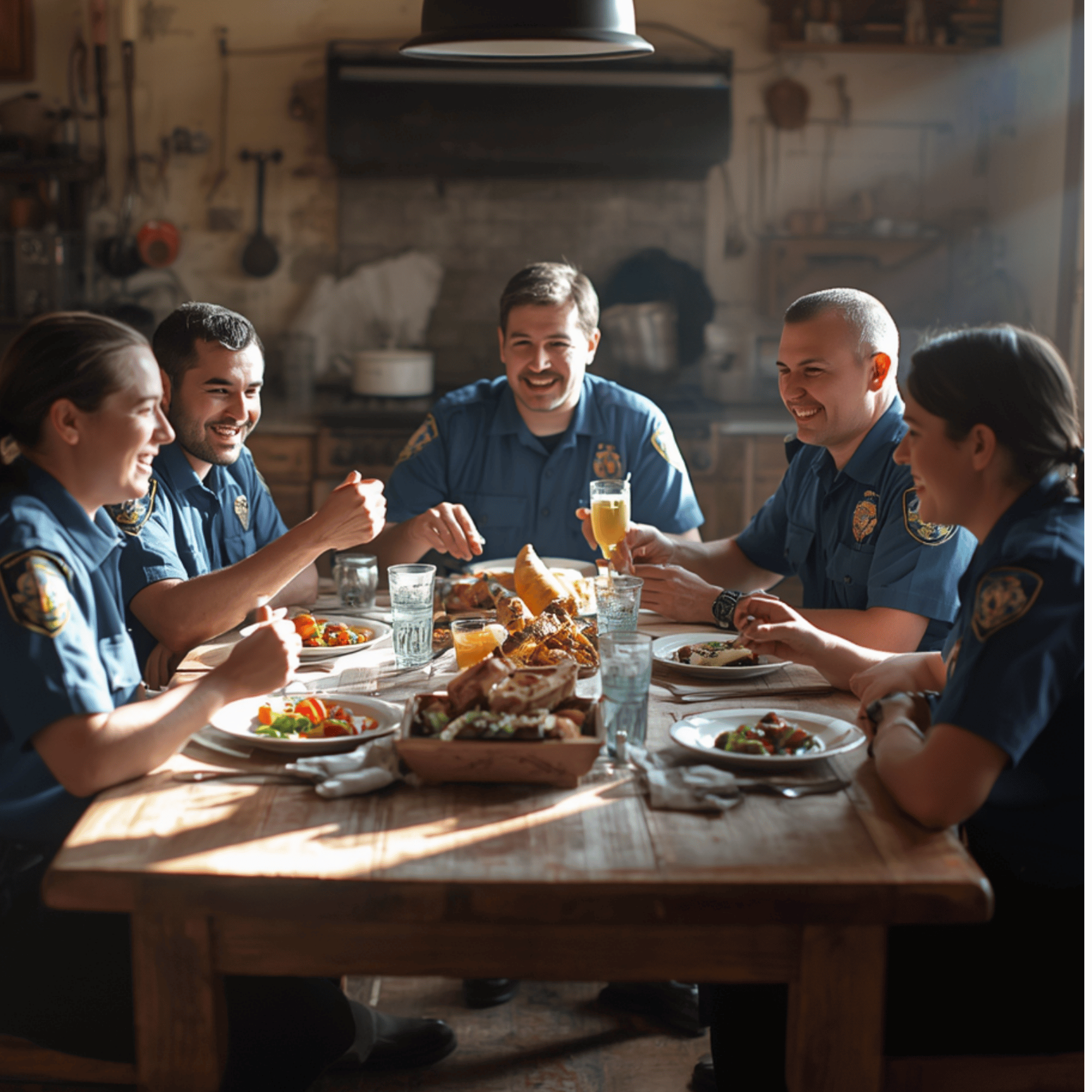
The firehouse kitchen is a special place. It's where we build relationships. It's where we decompress after difficult calls. It's where we share stories, laugh at ourselves, and sometimes have the conversations that matter the most. But let's be honest, it's also where a perfectly reasonable eating plan can go to die.
Now, today I wanna talk to you about something that can help us change that. It's called intentional eating. And no, this isn't another diet. I'm not going to tell you to throw everything out of your pantry. I'm not going to tell you that you can never eat pizza, and I'm certainly not going to suggest that you need to weigh every piece of chicken like you're conducting a hazmat inventory.
We're talking about [00:02:00] awareness. We're talking about understanding hunger, our habits, our emotions, and the decisions we make around food because here's what I've come to believe. We don't just need to eat better. We need to get better at understanding how we eat. I'm Travis McGaha. This is the All Clear Firefighter Wellness Podcast, where we have honest conversations, no judgment.
Let's get into it The conversation that started this a while back was one that I had with Jeff Ashe on another episode of All Clear. The episode was called Firefighter Intuition, Intuitive Eating for First Responders, and it got me to thinking about something. We spend a lot of time telling firefighters what they should eat.
We talk about protein, we talk about carbs, we talk about calories, meal prep, supplements, and all the different strategies for improving our nutrition, and those things can be [00:03:00] absolutely useful. But there's another part of the conversation that doesn't always get enough attention. That's our relationship with food.
How do we decide when to eat? How do we recognize hunger, and why do we keep eating when we're already satisfied? Why do we sometimes reach for food when what we really need is rest, relief, or even a few minutes to ourselves? And why do so many people move from one restrictive diet to another, feeling like they failed every time and they can't maintain the rules?
That's where the conversation with Jeff really struck me. The idea is that we can learn to pay attention to our body's signals rather than constantly fighting against them. That's the foundation of intuitive eating. Now, intentional eating takes that awareness and puts it into practice. It means recognizing what we're feeling, understanding what our body needs, considering the [00:04:00] situation we're in, and making a thoughtful decision.
A lot of pieces. And for firefighters, that matters because our work doesn't happen on a predictable schedule. We don't always get to eat when we're hungry, we don't always get to sleep when we're tired, and we don't always have the luxury of sitting down to a carefully prepped meal at the same time every day.
Our schedules can be unpredictable and brutal. Our stress levels can change in a matter of seconds, and our eating habits often reflect that reality. So this isn't about achieving some perfect nutritional routine. It's about learning how to make better decisions in the middle of an imperfect day And I think that's a conversation worth having.
Now, you can't out-discipline a broken routine. Let's look at a pretty typical day in the fire service. You wake up early, maybe you had a decent night's sleep, [00:05:00] maybe you didn't. You get to the station, you grab some coffee, and you figure you'll eat breakfast in a little while. Then the tones drop, you handle the call, you get back to the station, you clean up, and somebody needs help with something else.
Before you know it, half the morning's gone and you haven't even eaten much. You're hungry, you're tired, you're cranky, you're already thinking about lunch. Then another call comes in, and another. Finally, you sit down to eat. You're starving, and the first thing you can find looks pretty good. So you eat quickly, you go back for seconds, maybe you grab something sweet afterward because you still feel like you need a little something.
Then you start thinking about how you need to get your eating under control. Does that sound familiar? But here's the question: was the problem really a lack of discipline, or did your routine make it difficult to make a good decision in the first place? There's a difference. Sometimes we blame ourselves for a problem that could be [00:06:00] improved with a little planning.
Now, if you consistently go six or seven hours without a meal, you're probably going to have a harder time making thoughtful food choices when you finally do sit down. So if you're running on limited sleep, your appetite and food preferences may be affected. If you're stressed, your brain may be looking for something quick and rewarding.
It's not a moral failure. That's a reason to pay attention to what's happening. Now, we can't control every call. We can't guarantee a quiet shift, and we certainly can't schedule every emergency around lunchtime. But we can prepare for some of the challenges we know are coming. We can keep practical food options available, and we can have a backup plan.
We can recognize when our routine isn't working and just make adjustments. Intentional eating starts before the food ever touches the plate. It starts with understanding our circumstances and giving ourselves a better chance to [00:07:00] succeed. Now, we don't need a perfect plan. We need a plan that can survive our industry and the firehouse So we have to learn to read our own dashboard.
Think about the apparatus you operate. You pay attention to your gauges, you monitor the fuel, you look at warning lights, you pay attention to temperature and everything else that tells you how the vehicle's operating. You don't ignore the dashboard and hope everything works out. Now, your body has a dashboard too.
It's called hunger, energy, thirst, concentration, and satisfaction. The way you feel after a meal, those signals can provide useful information, but many of us have spent years ignoring them. We eat because the clock says it's lunchtime or even when we're not particularly hungry. We may ignore hunger because we're trying to stick to a restrictive diet.
We keep eating because the food tastes good and even though we're already comfortably full. And [00:08:00] sometimes we mistake every craving for hunger when what we're really experiencing is stress, fatigue, or even boredom. Now, let's be clear. Our bodies don't always send perfect signals. Shift work, poor sleep, demanding calls, stress, medications, and certain health conditions can all influence our appetite.
That's why intentional eating isn't about blindly following every feeling. It's about noticing the patterns and using that information to make thoughtful choices. Here's a simple way to start. Before you eat, ask yourself three questions. First, what am I feeling physically? Am I hungry? Have I gone several hours without eating?
Am I feeling low on energy? Have I had enough water? Maybe the answer is simple. You're hungry. Great. Enjoy a good meal. You don't need to turn it into a complicated exercise The second question is, what am I feeling emotionally? Am I [00:09:00] frustrated? Bored? Did the last call leave me wound up? Am I looking for a little comfort after a difficult day?
There's nothing wrong with enjoying food when you're having a hard time. Food can be comforting, meals can bring people together, and there's absolutely nothing wrong with enjoying something simply because it tastes good. But if food becomes our only way of dealing with stress, we might be overlooking what we actually need.
Sometimes we need a meal, sometimes we need a conversation with a trusted crew member, and sometimes we need to step outside, take a breath, and give ourselves a few minutes to decompress. And sometimes we need dinner and that conversation at the same time. The point is to recognize the difference. Third, what would help me feel nourished and satisfied?
This is where nutrition comes into the picture. We can consider protein, carbs, healthy fats, fiber, hydration, and the demands of our work [00:10:00] without creating a long list of forbidden foods. A firefighter prepping for physical training may have different needs than someone getting ready for bed after a busy night.
Someone recovering from a demanding shift may need to prioritize nourishment and rest rather than trying to compensate for what they ate the day before. The context absolutely matters, and learning to recognize that context is a big part of intentional eating. Now, we're not trying to become obsessed with food.
We're trying to become more aware of it. There's a big difference The firehouse food trap. Let's talk about the environment, because firefighters don't eat in a vacuum. We eat in a culture, and a firehouse culture has a powerful influence on our food choices. There's the tradition of cooking for the crew.
There's the birthday cake. There's the food somebody's spouse sent in. There's late-night [00:11:00] snacks after a busy evening. And of course, there's somebody standing in the kitchen saying, "You aren't going to let that go to waste, are you?" Well, apparently, there's a fire service regulation that says an uneaten biscuit is a preventable loss.
Haven't found it yet in the book, but I'm sure somebody's working on it. Well, here's the serious part. Sometimes we eat because we're hungry. Sometimes we eat because we're celebrating. Sometimes we eat because we're stressed, and sometimes we eat because everybody else is doing it. Those are different situations, and there's nothing inherently wrong with eating socially or enjoying food with your crew.
In fact, those kitchen table traditions can be part of what makes the firehouse so special. The goal isn't to remove the enjoyment from food. The goal is to make room for enjoyment without losing awareness. Let's say the crew orders pizza. You can have pizza. You don't need to become the person who lectures everyone about carbs while [00:12:00] holding a container of plain chicken and broccoli.
Nobody invented that. Nobody invented that or invited that person to dinner, honestly. But you can pause and ask yourself what you actually want. What do you want? Maybe two slices and a side salad sound good. Maybe you're hungry enough for three slices. Maybe you'd rather have something else. You can make that decision without guilt because food isn't a moral report card.
Eating a salad doesn't make you a better person. Eating a donut doesn't make you a failure. Some foods provide more of the nutrients our bodies need. Some are better suited for regular meals. Some are foods we enjoy occasionally, and some foods may be needed, uh, to be avoided or limited because of our health needs.
Those distinctions matter. But shame doesn't have to be part of the process. One meal doesn't determine your future. [00:13:00] Now, one dessert doesn't erase your workout either, and one healthy meal doesn't magically cancel out weeks of poor sleep and inconsistent habits. Your health is shaped by patterns over time.
So let's stop treating every meal like it's a pass or fail exam. Instead, let's build habits that can help us sustain through a busy shift, a difficult week, a family dinner, and the years after we hang up our gear. That's a much better goal Now, the five pillars of firefighter wellness have a connection here.
At All Clear, we believe there are five portions to firefighter wellness, physical fitness, diet, mental fitness, prevention, and a balanced life. Intentional eating connects to every one of them. Let's walk through that. Your body needs adequate nourishment to support strength, endurance, recovery, and the physical demands of the emergency response.
[00:14:00] Food isn't something you need to earn by exercising. It's part of what allows you to train, work, recover, and live. Now, diet. Now, this one is obvious, but it's bigger than the food itself. It's about building eating patterns that provide the nutrients you need while leaving room for enjoyment and some flexibility.
We're looking for consistency, not perfection. Now let's talk about mental fitness. Our emotions and eating habits can influence each other. Recognizing stress, frustration, boredom, and fatigue can help us understand why we reach for certain foods. And once we understand the pattern, we can decide whether we want to change it.
Prevention. Our daily habits are one part of our long-term health. Thoughtful nutrition can support overall health alongside appropriate medical care, physical activity, sleep, and recommended health screenings. We're not looking for a miracle food, we're [00:15:00] looking for sustainable habits that support us over time.
Finally, balanced life. This might be the most overlooked connection. Food is part of family life. It's part of our celebrations. It's part of the kitchen table conversations that help us decompress and reconnect. Wellness shouldn't require us to withdraw from every social situation or turn every meal into a math problem.
We can take our health seriously and still enjoy living. That's what we're working toward. Not a perfect diet, a healthier relationship with the things that sustain us So here are three shift actions. Let's bring this back to something practical. I've got three actions for you this week. Nothing complicated, nothing that requires buying a new product or downloading another app.
Just three ways to become a little more intentional. Action one: the 10-second check-in. Before you eat, pause for 10 seconds. Ask yourself, "Am I hungry? [00:16:00] What am I feeling right now? What would help me feel nourished and satisfied?" That's it. If you're hungry, eat. If you're stressed and hungry, acknowledge both.
Enjoy your meal, and consider what else might help you manage that stress. If you're not particularly hungry but genuinely want a piece of birthday cake with your crew, you can make that choice too. The pause isn't there to stop you from eating. It's there to help you understand your decision. Action two: build a plan B.
Think about one situation where your eating habits tend to go sideways. Maybe you skip breakfast. Maybe you get so hungry after a busy morning that lunch becomes a free-for-all. Maybe you rely on vending machines, snacks, uh, during the night, or maybe you even go home exhausted and eat whatever is the easiest because you haven't planned anything.
Pick one situation, build a backup plan, keep a few satisfying snacks available, prepare an extra meal, coordinate with the crew to make sure that there are [00:17:00] practical options when the schedule gets crazy. Don't try to overhaul every meal in your life by Monday morning. Solve one problem first. We're firefighters.
We understand contingency planning. Your nutrition deserves a little of that same attention. Action three: get curious, not judgmental. For the next three days, pay attention to your eating patterns. You don't need to count every calorie, you don't need to weigh your food, and you don't need to turn your phone into a full-time nutritional surveillance system.
Just notice a few things. What did you eat? How hungry were you before y- eating? And what were you feeling emotionally? How did you feel afterward? What patterns did you notice? Maybe you discover that poor sleep leaves you craving quick energy. Maybe you realize that you regularly skip meals when the station gets crazy.
Maybe you notice that you eat more quickly when you're distracted. Whatever you discover, treat [00:18:00] it as information, not evidence that you failed. The goal is curiosity, not judgment. And tracking food creates anxiety, guilt, or obsessive thoughts. Skip the log. You can work with a qualified dietician who understands your health needs and your relationship with food.
The purpose is to support your well-being, not create another stressor in your life. All right, here's the all clear challenge. Here's your challenge for the next seven days. Stop trying to be a perfect eater. Instead, work on becoming a more intentional eater. Pay attention to your hunger, notice your emotions, make one practical improvement to your firehouse food environment, and give yourself permission to enjoy without labeling every choice a success or a failure.
When you catch yourself eating on autopilot, don't beat yourself up. Simply notice it, uh, then make your next decision with a little more awareness. Now, [00:19:00] because the point isn't to control every bite, it's to build a healthier relationship with the food that sustains you. And remember, you don't have to change everything at once.
One better decision, one useful habit, one honest check-in at a time. That's how we build something sustainable. Now, take All Clear home with you. Now, before I wrap up, I wanna tell you about something we've put together here at All Clear. I really want to take a moment to tell you something that you ought to check out, because listening to a podcast is a great place to start, but taking what you learn and putting it into practice, that's where real change happens.
First, I want you to head over to allclearpodcast.com and download our Kitchen Table Playbook. The Kitchen Table Playbook is about bringing wellness into the place where so much of our lives actually happen, around the kitchen table. It's about starting [00:20:00] conversations, building better habits, and finding practical ways to take care of ourselves and the people around us, and that matters in the fire service.
We spend a lot of time taking care of everybody else. We take care of our crew, we take care of our community, we take care of our families, but sometimes we need a little reminder to take care of ourselves, too. That's what the Kitchen Table Playbook is designed to help us do. So don't just listen to this episode, nod your head, and go right back to doing the same old way.
Go get the playbook, put it to work. Bring the conversation to your kitchen table, your fear- your firehouse kitchen, or wherever you gather with the people who matter the most to you. So head over to allclearpodcast.com and download your Kitchen Table Playbook. It's a practical next step toward putting All Clear messaging into action And while you're there, I've got one more thing for you.
Let's talk coffee. Now, you've been [00:21:00] listening to All Clear for a while. You know we're pretty serious about firefighter wellness, but we're also serious about our coffee. We've got the All Clear Kitchen Table Blend, and it's a great way to bring a little All Clear into your daily routine. One of the things I love about the coffee is how smooth it is.
It's the kind of cup you can enjoy without feeling like you have to cover it with a mountain of cream and sugar. Now, I'm not saying all, all coffee is going to solve all your problems. If it did, the fire service would be the healthy- healthiest profession in America. But a good cup of coffee and a few minutes around the kitchen table, eh, that's a pretty good place to start a conversation, isn't it?
So if you want to support us and what we're building with All Clear, head over to allclearpodcast.com, check out the Kitchen Table Blend, grab yourself a bag. You're supporting an independent firefighter wellness platform while getting something you'll actually use. And if you're already drinking coffee every morning, you might as well make a cup that counts.
Download the Kitchen Table Playbook, [00:22:00] pick up some All Clear Kitchen Table Blend coffee, and help us keep the conversation about firefighter wellness going. You'll find everything at allclearpodcast.com. I'll see you at the Kitchen Table Before we wrap up, I want to leave you with a question Are you eating to take care of yourself?
Are you eating on autopilot because you've never stopped to ask what you need? That's not an accusation. Honestly, it's an invitation. Maybe you spent years moving from one diet to another. Maybe you've tried cutting out entire food groups, following strict rules, or promising yourself that Monday is gonna be the day everything changes.
Maybe some of those approaches helped you. Maybe others left you frustrated right back where you started. What if your next step isn't another set of rules? What if listening... What if learning to listen is the key? How about learning to plan, [00:23:00] learning to make decisions without treating food as the enemy?
We spend our careers learning to recognize problems before they become emergencies. We maintain our equipment. We train our people. We pay attention to the things that can go wrong, but sometimes we forget that taking care of ourselves requires that same level of intentionality. Nobody can make every decision for us, not a diet plan, not an app, not a fitness influencer, and not the guy at the station who swears that his way of eating is the only way to get healthy.
We have to learn what works for our bodies, our circumstances, and our lives. That's why I keep coming back to that conversation with Jeff Hash. Learning to recognize your body's signals can help us move away from the constant battle of restriction, guilt, and starting over. And intentional eating gives us a practical way to put that awareness into action.
If you haven't listened to the original episode, go back, give it a listen. It's a worthwhile use [00:24:00] of your time about intuitive eating and the relationship we have with food. And if you're struggling with your eating habits, your weight, or the emotional side of food, you don't have to figure it out alone.
A registered dietician, particularly one experienced in firefighter or first responder health, can help you develop an approach that fits your needs. Asking for help isn't weakness, it's taking responsibility for your health. Remember something important. You're more than your weight, you're more than the number on that scale, and your worth isn't determined by what you ate for breakfast.
You're a person doing a demanding job, navigating a demanding life, and trying to take care of yourself along the way. Give yourself room to learn, give yourself room to improve, and give yourself some patience you'd offer a brother or sister on your crew who's working through something difficult. Honest conversations, no judgment.
That's how we [00:25:00] start. Well, here's some questionable humor The firehouse food regulations. Now, one final public services announcement. Now, I'm a code guy. If somebody brings a box of donuts into the firehouse, you are not legally required to eat one just because it's been placed within three feet of your chair.
I checked the code book. There's no NFPA standard for mandatory donut consumption. Although I'm fairly certain somebody's going to try to write one, but if you decide to eat a donut, enjoy it. Don't let the guy who brought them in convince you that the second donut is part of your continuing education requirements.
That's not an approved training activity, at least not yet. All right. Light your fire within. As we always say, at the end of the day, intentional eating isn't about perfection. It's about awareness. It's about learning to fuel your body, respect your needs, and enjoy your food, and make choices that [00:26:00] support the firefighter you are today and the person you want to be in 20 or 30 years from now.
Because this job is demanding enough without turning every meal into another body-- uh, another battle. So take care of your body, pay attention to what it's telling you, give yourself room to learn, and remember that wellness isn't built in one heroic moment. It's built through the small decisions we make day after day, shift after shift, meal after meal.
And before you head out, don't forget about your homework. Visit allclearpodcast.com, download the Kitchen Table Playbook, and check out All Clear Tab-- uh, Kitchen Table Blend Coffee. Take a little piece of All Clear home with you because this isn't just about listening to a podcast. It's about building healthier habits, better conversations, and taking care of the people who take care of everyone else.
Thank you for being part of the All Clear family. Take care of yourself, take care of your crew, and take care of the people [00:27:00] that are waiting for you at home. I'm Travis, and this is All Clear. Until next time, stay safe, take care of one another, and light your fire within.