Compliance Is Not Culture

Send us Fan Mail You can require firefighters to attend a wellness seminar, complete an annual physical, or participate in a fitness assessment. You can write policies and establish standards. But you cannot mandate that someone genuinely care about their health—and a department cannot create a healthy culture simply by adding another requirement. In this episode of All Clear, we look at the difference between compliance and culture, and why that distinction matters to firefighter wellness. C...


Key Takeaways
- Compliance ensures external participation through policies and standards, but true firefighter wellness culture builds internal ownership based on what people do when nobody is watching.
- Developing a robust firefighter wellness culture requires moving beyond short-lived initiatives and treating health as a daily leadership responsibility.
- A department's overall wellness must address five core pillars: physical health, mental wellness, proper nutrition, occupational risk prevention, and life balance.
- Firefighters pay closer attention to the daily behaviors demonstrated by their leaders than to the official policies announced from the office.
- Establishing consistent everyday habits, open kitchen-table conversations, and removing organizational barriers are critical steps to turning a wellness program into a lasting cultural norm.
You can require firefighters to attend a wellness seminar, complete an annual physical, or participate in a fitness assessment. You can write policies and establish standards. But you cannot mandate that someone genuinely care about their health—and a department cannot create a healthy culture simply by adding another requirement.
In this episode of All Clear, we look at the difference between compliance and culture, and why that distinction matters to firefighter wellness. Compliance is external: it is the requirement, the policy, and the box that gets checked. Culture is internal: it is what people believe, value, and continue doing when nobody is watching.
This is not an argument against standards or accountability. Protective equipment, occupational safety practices, medical evaluations, and cancer-prevention measures matter. They should be established and enforced. The problem comes when leaders assume that creating a requirement automatically changes behavior or creates ownership.
Leadership Sets the Example
Firefighters pay attention to what leaders demonstrate—not just what they announce. When leaders talk about fitness but do not make it a priority, promote medical evaluations but avoid preventive care themselves, or say mental health matters while ridiculing someone who asks for help, the message is clear. Everyday decisions shape whether people believe the organization genuinely cares about their health, families, and future.
Wellness Is Bigger Than Fitness
The episode frames wellness through five pillars. Physical fitness matters, but it is only one part of a firefighter’s overall health and long-term quality of life.
- Physical: Maintaining the strength, mobility, and conditioning needed to do the job and enjoy life after the job.
- Mental: Recognizing the weight of the profession and creating an environment where asking for help is acceptable.
- Diet: Understanding how nutrition affects performance, recovery, and long-term health.
- Prevention: Reducing occupational risk, recognizing potential health problems, and taking proactive steps to protect ourselves.
- Life Balance: Remembering that firefighters are people before they are firefighters, with families, relationships, responsibilities, and lives outside the department.
Programs Are Not the Same as Culture
A wellness initiative can begin with energy—a speaker, a training session, a committee, and a series of emails—then fade when attention moves elsewhere. Attendance and completion numbers have value, but they do not prove that anything has changed. A better test is what happens when the wellness coordinator is not around: Are people still talking about health? Are officers encouraging preventive care? Are cancer-prevention practices part of normal operations? Can someone ask for help without fear?
Five Places Leaders Can Start
- Model the behavior. Leaders do not have to be fitness models or marathon runners. They do need to demonstrate that their own health matters by making time for movement, scheduling physicals, and talking openly about prevention.
- Make wellness part of the everyday conversation. Do not save wellness for an annual seminar. Talk about it at the kitchen table and make conversations about mental health, nutrition, and preventive care normal.
- Remove the barriers. Make healthy choices more realistic. Consider opportunities for exercise, food options at the station, access to mental health resources, and the equipment, training, and procedures that support cancer prevention.
- Give your people ownership. Ask firefighters what wellness means to them, what challenges they face, and what one change would make their work environment healthier. Then listen.
- Be consistent. Do not discuss mental health only after a tragedy, cancer prevention only during a training session, or fitness only after an assessment is failed. Pick one thing, do it well, keep doing it, and build from there.
The Takeaway
The goal should not simply be to get someone through twenty-five years in the fire service. It should be to help them enjoy the twenty-five years that come after it. Policies, standards, and accountability are necessary, but leadership must also create an environment where people understand the value of taking care of themselves and feel supported in doing it. Compliance can get a form completed. Culture determines what happens after that.
Key Takeaways
- Compliance creates participation; culture creates ownership.
- A policy can establish an expectation, but it cannot guarantee that people embrace the value behind it.
- Firefighters pay more attention to what leaders demonstrate than what they announce.
- Wellness includes physical, mental, diet, prevention, and life balance.
- A department’s culture is revealed by what continues when nobody is watching.
- Accountability and trust are both necessary. Mandatory safety practices remain mandatory.
- Sustained, everyday actions—not short-lived initiatives—turn wellness into culture.
Thanks for listening to All Clear!
You can contact us with questions, suggestions or just to say hi at our website
allclearpodcast.com
Also pick up a bag of our signature All Clear Coffee. A unique cup that will quickly become your new morning hero in a cup!
Please like and subscribe on you platform of choice! It dosent cost you anything and it helps us more than you will ever know!
Frequently Asked Questions
What is the difference between compliance and culture in firefighter wellness?
Compliance is external participation driven by policies, rules, and checked boxes, whereas culture is internal, reflecting the values and beliefs that guide firefighters' actions when nobody is watching.
What are the five pillars of firefighter wellness?
The five pillars of firefighter wellness are physical health, mental wellness, diet and nutrition, occupational prevention, and life balance outside of the department.
How can fire service leaders improve firefighter wellness culture?
Leaders can build a stronger culture by modeling healthy behaviors, normalizing wellness conversations at the kitchen table, removing structural barriers, giving personnel ownership, and remaining consistent.
Why do wellness programs sometimes fail in fire departments?
Wellness programs often fail when they are treated as short-term projects or checkboxes rather than continuous priorities embedded into the everyday operations of the department.
You know, you can make somebody go to the gym. You can make somebody attend a wellness seminar. In fact, you can make somebody complete an annual physical. You can even write a policy telling people how to make better firefighters and how to better take care of themselves. But here's the problem, you cannot mandate that somebody genuinely care about their own health, and you certainly can't mandate that an organization care about the health of its people.
That's the difference between compliance and culture. Now, I think the fire service has spent a lot of time confusing the two of those things. You know, we've gotten pretty good at creating policies, programs, initiatives, and requirements, but are we actually creating healthier firefighters, or are we just getting better at ticking the boxes?
Because compliance is about doing what you're told, whereas culture is about what you believe, what you [00:01:00] value, and what you do when nobody is standing there watching you. If we want to make a meaningful difference in firefighter wellness, we need to stop treating it like another program and start treating it like a leadership responsibility.
Let's talk about it Now, compliance is participation. Culture creates ownership. So let's start with a simple distinction. Compliance is external. Somebody tells you what to do, they establish a requirement, and they, they expect you to follow it. However, culture is internal. It's the environment that shapes how people think, behave, and make decisions.
Now, there's nothing inherently wrong with compliance. We need our policies, we need standards, we need accountability. In fact, the fire service is built on compliance with certain safety practices, and these can literally save lives. Now, we should absolutely have requirements for protective equipment, for medical [00:02:00] evaluations, cancer prevention policies, and other occupational safety measures.
But here's where we get into trouble. We sometimes assume that because we've established a requirement, we've changed the behavior, and those aren't the same thing. You can require that a firefighter attend a physical fitness assessment, but does that mean that you've created a culture of physical fitness?
You know, you can require an annual medical evaluation, but does that mean that you've created a culture of preventative health? You can put mental health resources in place and even have a policy, but that doesn't mean you've created an environment where somebody feels comfortable asking for help. You know, a policy can establish an expectation.
It cannot guarantee that people will embrace the value behind it, and that's where leadership has to step up. Your people are watching what you do. Now, we talk a lot about leadership in the fire [00:03:00] service. We set expectations. We lead by example. We build trust. We're into developing people. But wellness is one area where I think we need to take a harder look at ourselves.
If the chief talks about physical fitness but never makes it a priority personally, people notice. If an officer encourages annual medical evaluations but hasn't seen a doctor in a decade, people will notice. If we tell people mental health matters but make jokes when someone asks for help, people notice.
And if we tell firefighters their families are important while consistently rewarding the people who sacrifice every family commitment for that department, people notice that Your people pay more attention to what you demonstrate than what you announce. That's true of every aspect of leadership, but it's especially important when we're talking about wellness, because wellness requires [00:04:00] trust.
People have to believe that the organization genuinely cares about them, not just their ability to fill a position, not just their ability to make the call, not just their productivity, their health, their families, and more importantly, their future. And that belief isn't created by a memo from the chief.
It's created through everyday decisions. It's created by company officers who make time for physical activity. It's created by leaders who encourage preventative care. It's created when somebody admits they're struggling, and the response is support instead of the ridicule. It's created when taking care of yourself is viewed as being a better firefighter, not a less committed one.
Wellness is bigger than a fitness program. Now, another mistake we make is reducing wellness to physical fitness. [00:05:00] Physical fitness absolutely matters, but a firefighter can be physically capable and still be struggling in several other areas of life. That's why I want to look at wellness through five pillars: physical, mental, diet, prevention, and life balance.
Now, physical wellness is about maintaining the strength, mobility, and conditioning to do the job and enjoy life after the job. Mental wellness is about recognizing the weight of this profession, and it helps us understand how to carry what we have, creating an environment where asking for help is acceptable when needed.
Diet is about our understanding how nutrition affects our performance, recovery, and long-term health. Prevention is about reducing occupational risk, recognizing potential health problems, and taking proactive steps to protect ourselves. [00:06:00] And finally, life balance is about remembering that we're people before we're firefighters.
We all have families, relationships, friends, responsibilities, and lives outside of the department. Now, think about those five pillars from an organizational perspective. Are we creating opportunities for physical activity? Or are we making healthy food choices realistic at the station? Are we creating an environment where mental health conversations can happen without fear?
Are we taking cancer prevention seriously enough to make it part of our everyday operations? Are we encouraging people to have a life outside of the fire department? Or are we simply telling firefighters what they should be doing and leave them to figure out the rest? Now, you cannot demand healthy behavior while maintaining an unhealthy environment.
That's not what wellness strategy [00:07:00] is. That's transferring responsibility without providing support, and leadership has to recognize the difference. Stop making wellness another checkbox. Here's something else worth considering too. How many times have we launched a wellness initiative with a lot of excitement?
We bring in that speaker, we schedule a training session, we establish a committee, we even send out emails. Everybody's involved. Then six months later, we're onto something else. The initiative technically is still there, but nobody's talking about it. That's what happens when wellness is treated as a project instead of a priority.
We measure success by attendance. How many people participated? How many people completed the assessment? How many people signed up? Those numbers do have value, but they don't necessarily tell us whether anything has changed. Now, here's a better question. What happens when the wellness coordinator isn't [00:08:00] around?
Are firefighters still talking about their health? Are company officers still encouraging preventative care? Are crews still making healthier decisions? Are people comfortable asking for help? Are cancer prevention practices happening because they're part of the operation or because somebody is checking?
The real measure of culture is what is happening when nobody is watching That's when you find out whether you built something meaningful or you just created another program. Trust matters more than another mandate. Now, I want to be clear about something. I'm not suggesting that we eliminate the requirements or accountability.
There are certain things in this profession that absolutely must be mandatory. Cancer prevention practices, protective equipment, requirements and occupational safety standards aren't optional simply because somebody doesn't feel like participating. [00:09:00] Leadership has an obligation to establish and enforce those standards.
But there's a difference between requiring a safety practice and trying to force somebody to embrace wellness. We need both accountability and trust. Now, if firefighters believe wellness is just another way to evaluate them, they'll be guarded. If they believe admitting a mental health concern could damage their career, they may stay quiet.
If they believe their medical information won't be handled appropriately, they may avoid participating. People need to feel supported, not monitored. Now, the goal here is to create an environment where people understand the value of taking care of themselves and have the resources to support and do it.
That's ownership. And ownership is what moves us from compliance to culture. So how do we [00:10:00] actually make this happen? If you're a chief, company officer, wellness coordinator, or somebody who wants to make a difference in your department, here are five places to start. First, model the behavior. You don't have to be a fitness model.
You don't have to run marathons. But you do have to demonstrate that your health matters. Schedule your physical, make time for movement, talk openly about prevention, show your people that taking care of yourself is part of being responsible for the long haul Second, make wellness part of the everyday conversation.
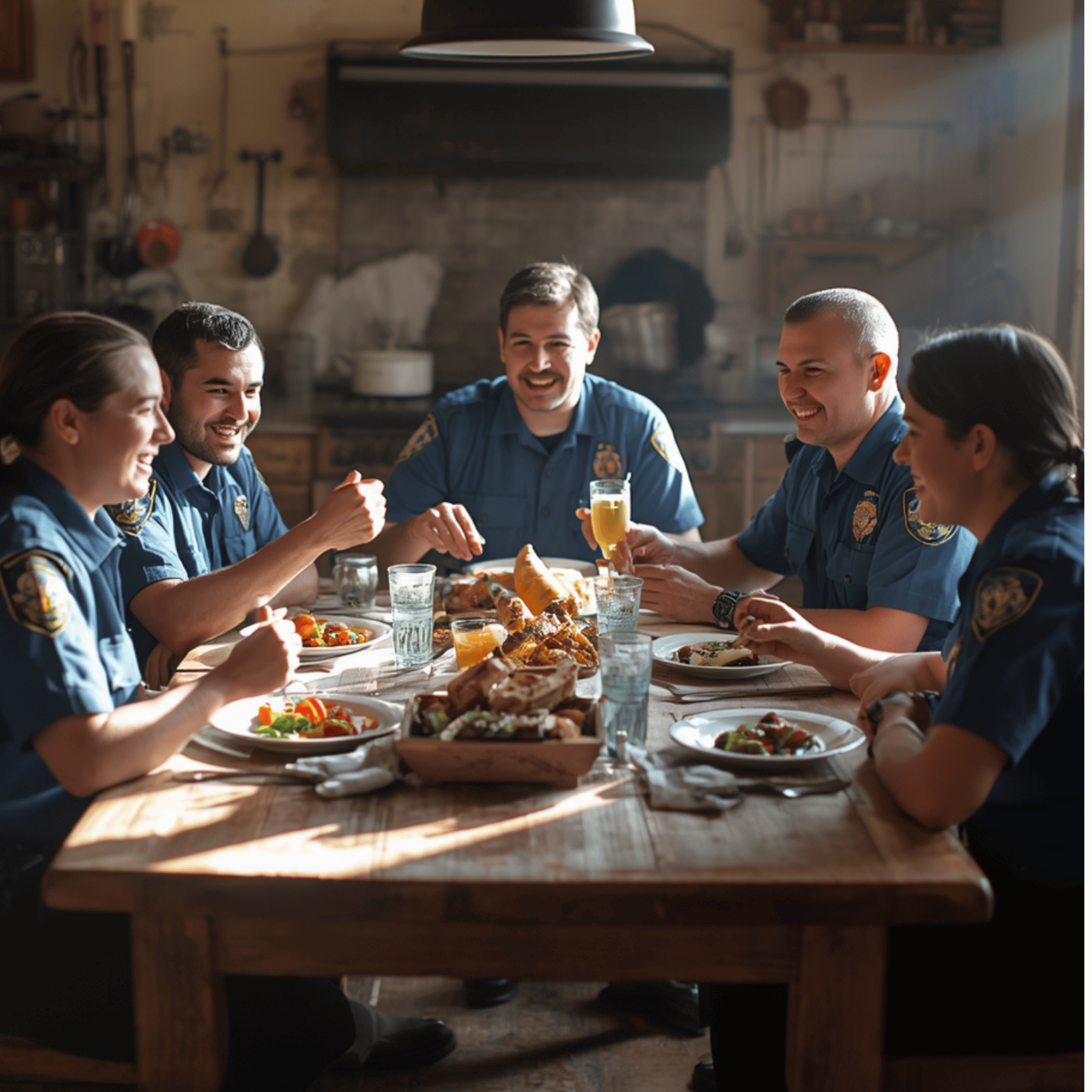
Stop saving wellness for an annual seminar. Talk about it at the kitchen table. Ask people how they're doing. Encourage somebody who is making positive changes. Make conversations about mental health, nutrition, and preventative care. Make those conversations normal. Culture is built in [00:11:00] everyday interactions, not annual presentations.
Third, remove the barriers. Look at your organization. Are you making healthy choices easier or harder? Do your people have reasonable opportunities for exercise? Are healthy food choices realistic? Do firefighters know how to access mental health resources? Are your cancer prevention practices supported with the right equipment, training, and procedures?
Don't just tell people what they should do. Give them the opportunity to do it. Fourth, give your people ownership. Ask your firefighters what wellness means to them. Ask what challenges they're facing and what one change would make their work environment healthier. Then listen. People are more likely to support something they help build than something handed down from [00:12:00] an office.
Fifth, be consistent. Don't talk about mental health only after a tragedy. Don't talk about cancer prevention only during a training session, and don't promote physical fitness only when somebody fails an assessment. Make wellness part of how your organization operates. And remember, you don't have to change everything tomorrow.
Pick one thing. Do it well. Keep doing it. Then build on it, because consistency is what turns an initiative into habit, and habits repeated across an organization eventually become culture I want to leave you with something to think about. We spend years teaching firefighters how to do their job. We teach them how to operate equipment, manage emergencies, and make decisions under pressure, and to protect the communities we serve.
But how much time do we spend teaching them how to protect [00:13:00] themselves? Not just on the fire ground, not just during an emergency, but through their entire career and on into retirement. Because the goal shouldn't simply be to get somebody through twenty-five years of fire service. The goal should be to help them enjoy the twenty-five years that come after it, and that requires a different way of thinking.
We need policies, we need standards, we need accountability, but we also need leadership that understands the difference between getting people to comply and creating an environment where people want to do the right thing. Because compliance can get somebody through the door, it can get a form completed, it can get a requirement checked off, but culture determines what happens after that.
So if you're in a leadership position, here's my challenge. Take a look at your department. Don't just ask what wellness programs you have. Ask what your culture [00:14:00] communicates about wellness, and whether your people feel supported or not. Ask whether your officers are setting the example, and ask whether the decisions you're making actually support the message you're sending, because compliance is not culture.
And if we want healthier firefighters, healthier departments, and healthier retirements, we have to stop confusing the two. We don't need another checkbox. We need to-- a change in how we think about taking care of our people, and that change starts with leadership. Now, until next time, take care of yourself, take care of each other, and remember, we want you to be good at the job, but we also want you to be healthy enough to enjoy the life you've worked on so hard to build.
This is All Clear. Stay safe, stay healthy, and light your fire within.